How Do You Fix a Coolant Leak
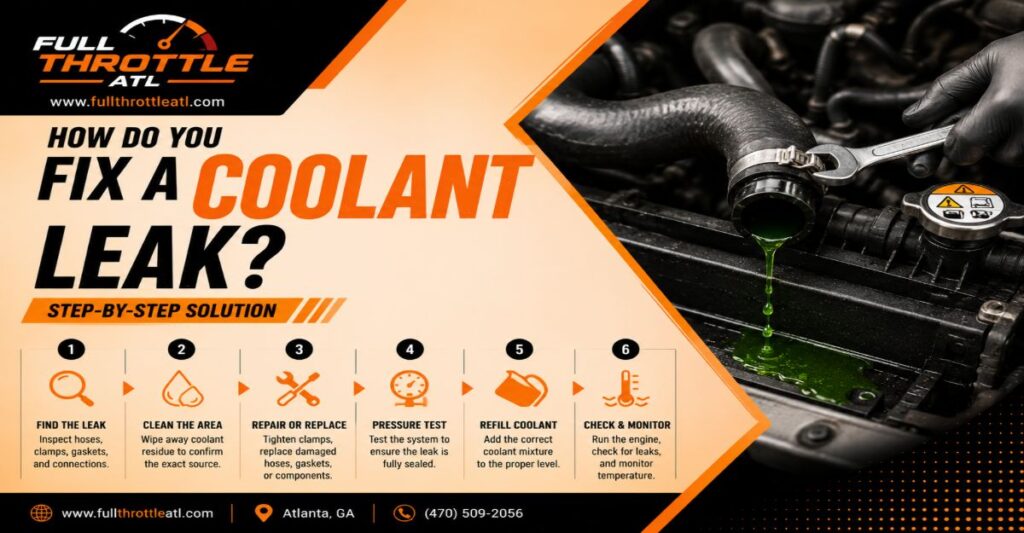
Fixing a coolant leak requires locating the source of fluid loss, safely draining the system, replacing the damaged part or hose, and refilling and bleeding the cooling system. This 6-step repair takes 2 to 4 hours, requires intermediate mechanic tools, and relies on precise bleeding to prevent engine overheating. Step 1: Verify Safety and Perform […]
How to Find a Coolant Leak
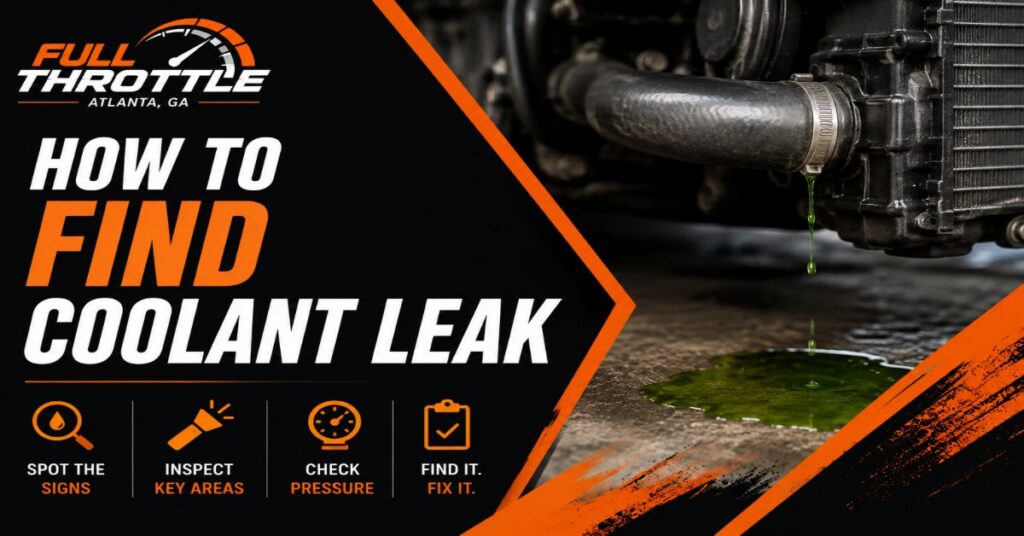
Pinpoint and diagnose coolant leaks safely and accurately using a hand pressure tester and UV dye. This comprehensive, 6-step process takes 1 to 2 hours, requires beginner-to-intermediate mechanical skill, and ensures you identify both hidden internal leaks and obvious external puddles on the first attempt without risking engine damage. Before You Start Tools and Materials […]
How to Use Radiator Stop Leak Safely and Effectively
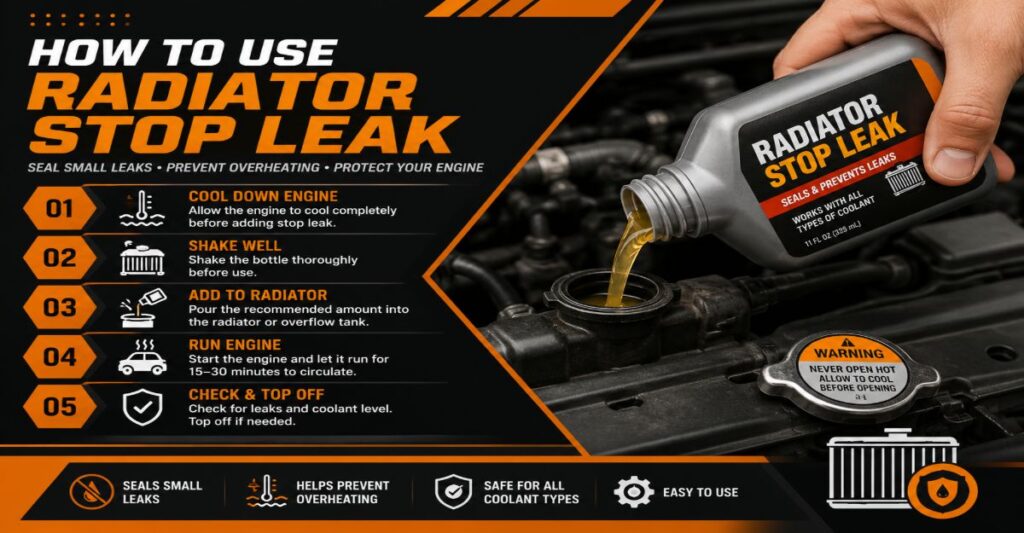
Using a radiator stop leak is a reliable temporary fix to seal small coolant leaks under 0.8mm in your vehicle’s cooling system. By following a structured 7-step process-involving cooling, precise fluid adjustment, active circulation, and system bleeding-you can complete this task in 45 minutes for a modest product cost, with success depending entirely on proper […]
Where Is the Radiator in a Car?
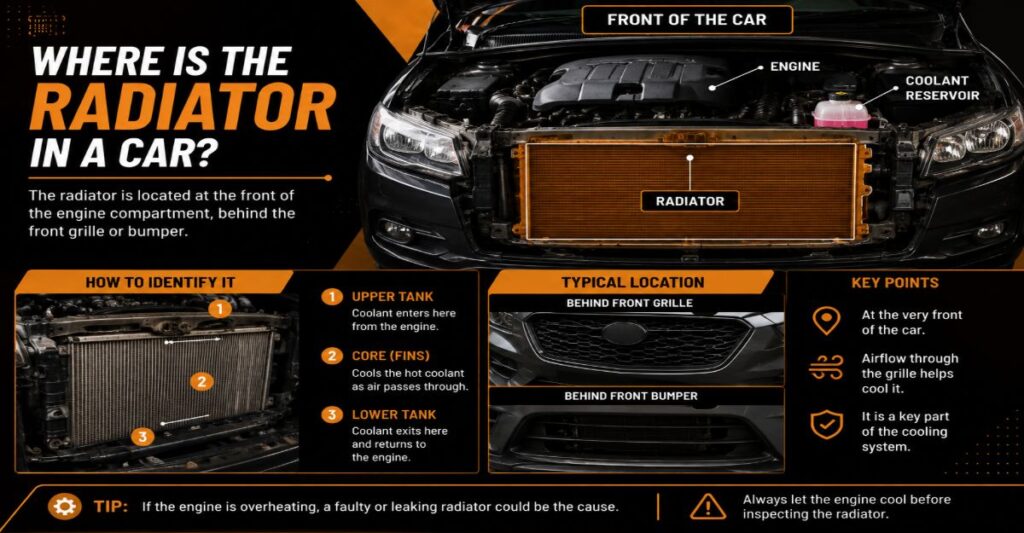
The car radiator is almost always located at the very front of the engine bay, directly behind the main grille and in front of the engine block. This forward placement maximizes exposure to high-speed airflow as the vehicle moves forward, facilitating efficient heat exchange for the engine cooling system. What is the exact physical layout […]
Why Is My Coolant Low But No Leaks: The Definitive Diagnostic Guide
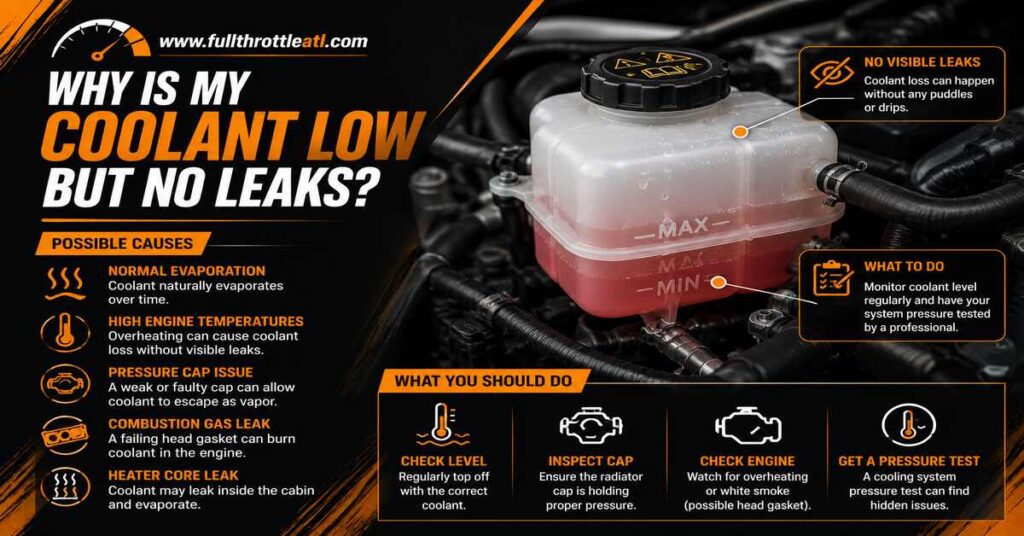
Finding your coolant reservoir empty week after week without a single puddle on your garage floor is frustrating, but it points to a specific set of hidden issues. This definitive guide walks you through the 4-step diagnostic process to locate internal burning, cap vaporization, or micro-evaporation leaks. By following these steps in order, you will […]
Can Engine Coolant Evaporate? The Truth About Fluid Loss
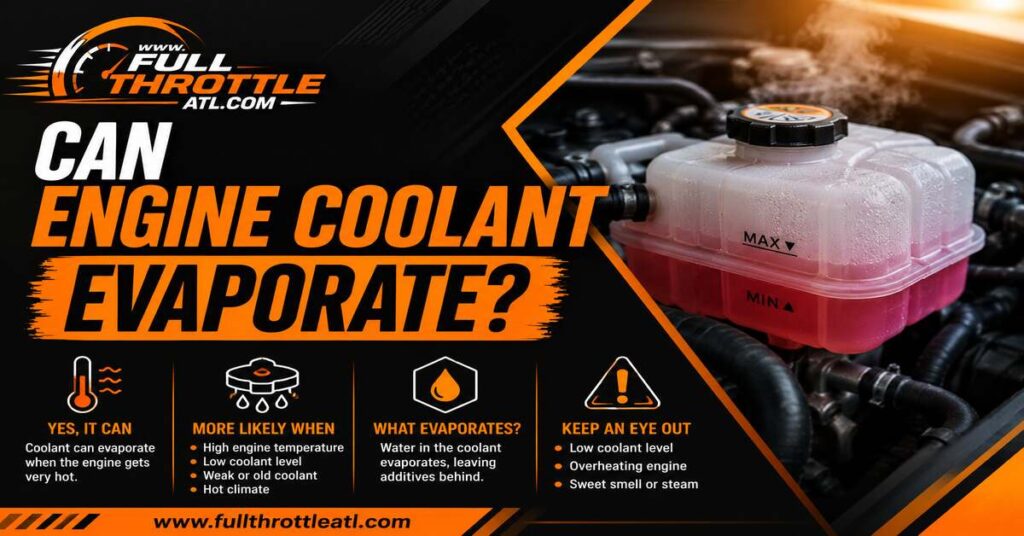
Engine coolant can evaporate, but it does not evaporate significantly under normal conditions because it operates within a pressurized, closed-loop thermal management system. True environmental evaporation is limited to less than 500 mL every 3 to 6 months, escaping strictly through the overflow reservoir vent via differential distillation. Any rapid, noticeable drop in fluid level […]
How to Tell If Your Radiator Is Leaking
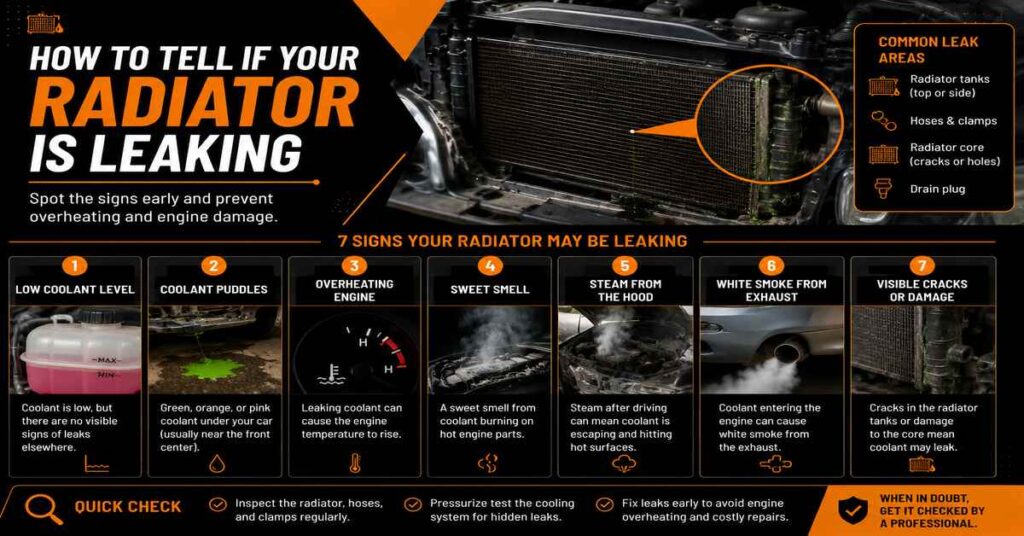
Diagnosing a leaking radiator involves a methodical 4-step process-cooling, visual inspection, pressure testing, and UV dye detection-taking 45 to 75 minutes. Success depends entirely on allowing the engine to cool completely and strictly matching your vehicle’s factory pressure cap specifications to prevent permanent engine damage. Before You Start Tools and Materials Checklist Step 1: Cool […]
What Causes a Radiator to Leak?
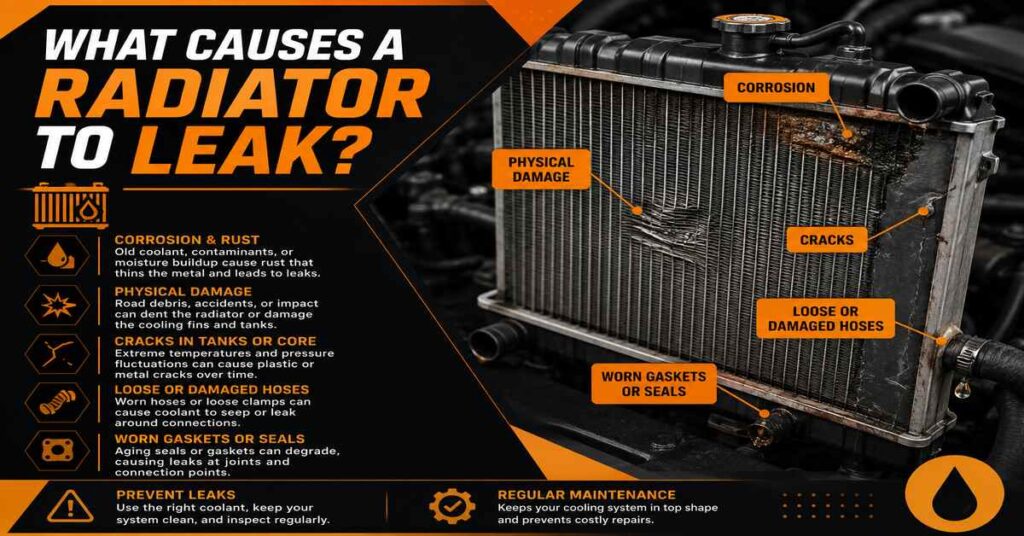
Radiator leaks are primarily caused by physical degradation, chemical imbalances, or extreme thermal stress, with most failures occurring in vehicles exceeding 100,000 miles or radiators older than eight years. These failures stem from a breakdown of internal metal barriers, aged rubber components, or cracked plastic end tanks that can no longer withstand standard system pressure. […]
When to Replace Your Fuel Filter: Intervals and Symptoms

Replace a serviceable inline fuel filter every 20,000 to 40,000 miles or every two years to maintain optimal engine performance. Modern vehicles with in-tank “lifetime” filters typically require replacement only when the fuel pump fails, usually between 60,000 and 100,000 miles. Diesel engines demand strictly scheduled replacements every 10,000 to 15,000 miles. At a Glance […]
What Does a Coolant Leak Look Like?
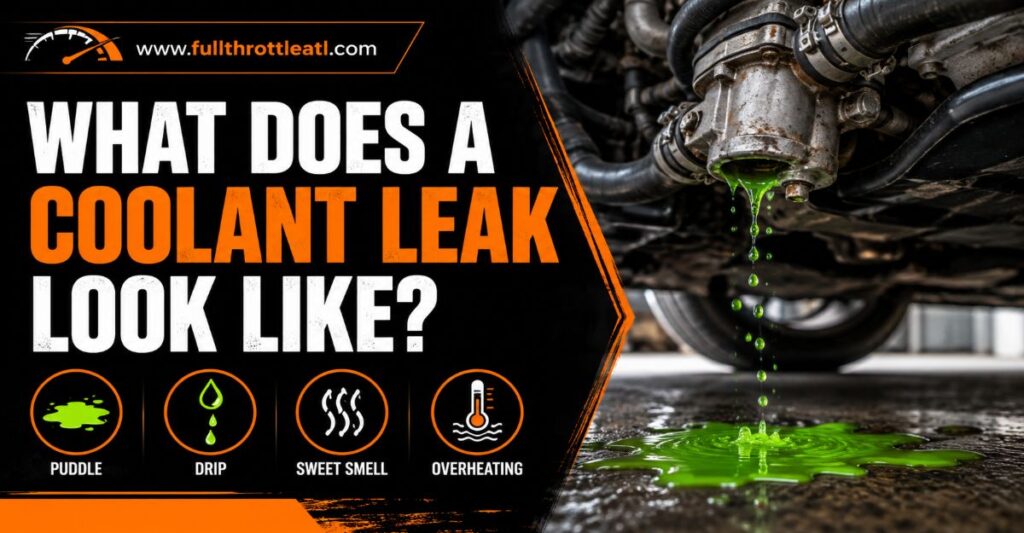
A coolant leak typically looks like a bright, watery puddle of green, orange, pink, or blue fluid beneath your engine bay, accompanied by a sweet, syrup-like smell. Unlike engine oil or transmission fluid, automotive engine coolant has a watery viscosity of 1.0 to 1.1 mPa·S and leaves zero greasy residue on concrete. At a Glance: […]