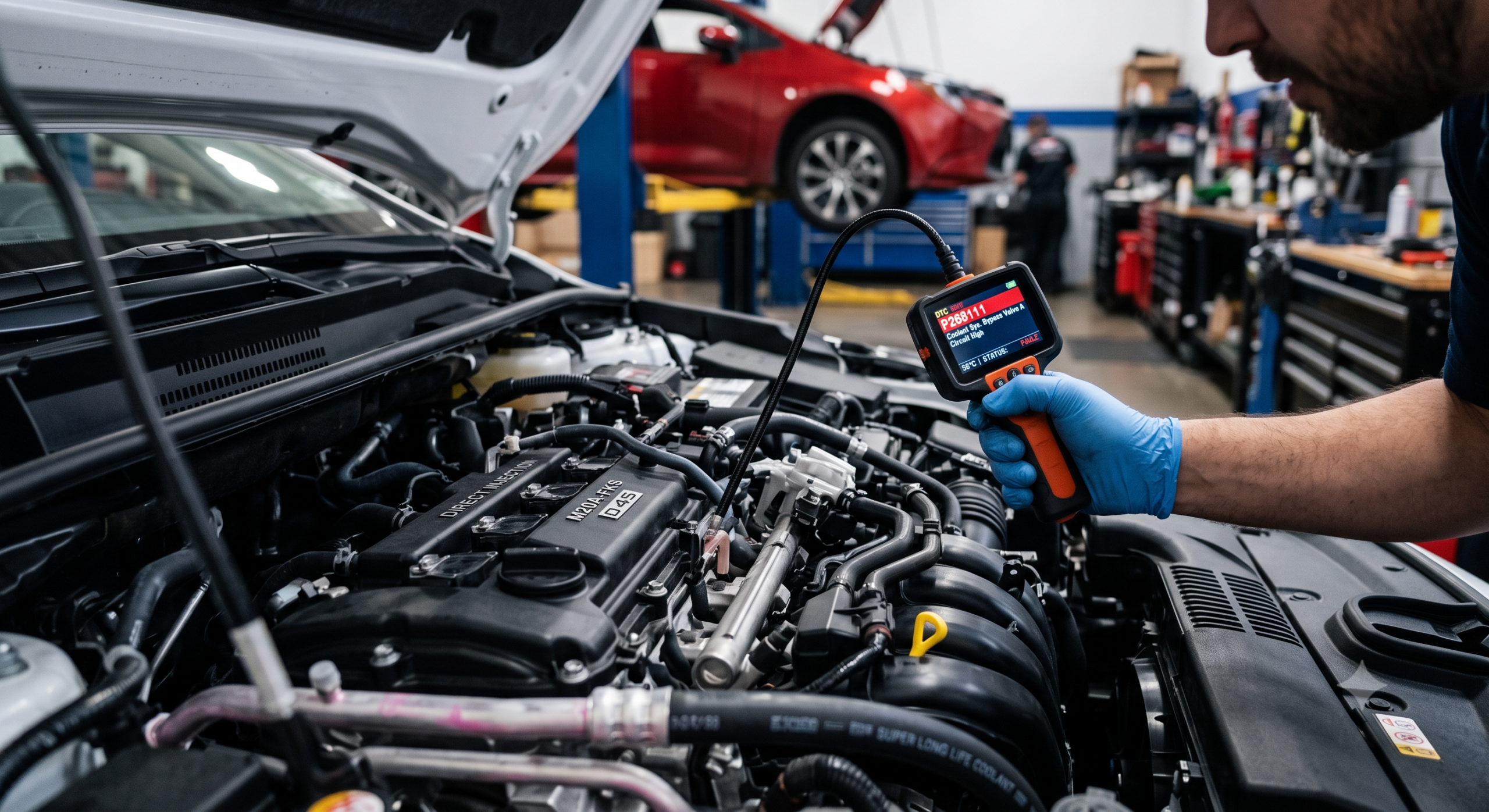
Toyota has built a legendary reputation for manufacturing some of the most reliable and long-lasting vehicles on the planet. For decades, the Corolla has been the poster child for this bulletproof dependability. However, as automotive technology advances to meet stricter emissions and fuel economy standards, engines have become increasingly complex. The 2.0L Dynamic Force engine is no exception.
If you are a driver, a buyer, or a home mechanic looking into toyota corolla 2.0 engine problems, you are in the right place. While the M20A-FKS 2.0L engine is overwhelmingly reliable and widely praised, it does possess a few specific quirks and technical nuances that owners need to monitor. Ignoring these minor issues can eventually lead to frustrating breakdowns or expensive repair bills down the road.
In this comprehensive guide, we will break down the exact engineering behind the 2.0L Dynamic Force engine, explore the most commonly reported technical issues, and provide actionable, expert advice on how to prevent them and keep your Corolla running perfectly for hundreds of thousands of miles.
Understanding the M20A-FKS Dynamic Force Engine
Before we can diagnose the problems, it is important to understand what makes this engine unique. Introduced for the 2019 model year and widely adopted in the 12th generation Toyota Corolla (and other models like the RAV4 and C-HR), the M20A-FKS is a 2.0-liter naturally aspirated inline-four engine.
Toyota designed the “Dynamic Force” family of engines to achieve world-class thermal efficiency. This engine reaches an impressive 40 percent thermal efficiency (41 percent in hybrid applications). It does this by utilizing a remarkably high 13:1 compression ratio, a longer piston stroke, and a sophisticated laser-clad valve seat design that improves airflow and cooling.
To manage fuel delivery, Toyota equipped this engine with its proprietary D-4S dual-injection system. This means the engine has two sets of fuel injectors: one set that sprays directly into the combustion chamber (direct injection) and another set that sprays into the intake manifold (port injection). This hybrid injection setup is critical to understanding both the strengths and the occasional weaknesses of the 2.0L engine.
While it is a marvel of modern engineering, the complexity of electric variable valve timing (VVT-iE), dual-injection, and high-compression designs creates a few specific failure points. Let us dive into the most common Toyota Corolla 2.0 engine problems you might encounter.
Problem 1: Carbon Buildup on Intake Valves
In many modern engines that rely solely on direct injection, carbon buildup (also known as coking) is a massive problem. Because fuel is sprayed directly into the cylinder, the backside of the intake valves never gets “washed” by the gasoline. Over time, oil vapors from the Positive Crankcase Ventilation (PCV) system bake onto the hot valves, restricting airflow, causing misfires, and tanking fuel economy.
How the Corolla 2.0 Handles It
Fortunately, Toyota anticipated this issue. The D-4S injection system uses the port injectors during low-load situations (like idling or cruising at low speeds) specifically to wash the intake valves with fuel, preventing severe carbon buildup.
The Underlying Issue
Despite this brilliant engineering, the system is not completely immune to carbon buildup. Once the engine crosses the 50,000-mile mark, a minor amount of intake valve coking can still occur, particularly on the Exhaust Gas Recirculation (EGR) components. If you frequently take short trips where the engine never reaches its full operating temperature, this buildup accelerates.
Symptoms of Carbon Buildup:
- Rough idling or hesitation when accelerating from a stop.
- A noticeable drop in fuel economy.
- Occasional engine misfire codes (Check Engine Light).
The Expert Fix:
To prevent this, ensure you take your car for a sustained highway drive at least once a week to let the engine reach optimal temperatures. If carbon buildup has already occurred, you may need a professional induction cleaning service, or in severe high-mileage cases, a physical “walnut blasting” of the intake valves by a certified mechanic.
Problem 2: Coolant Leaks and Water Bypass Valve Failure
The cooling system on the 2.0L Dynamic Force engine is highly advanced. Instead of a traditional mechanical water pump driven by a serpentine belt, the M20A-FKS utilizes an electric water pump and a complex electronic thermostat system known as a water bypass valve. This allows the engine computer to precisely control coolant flow, helping the engine warm up faster to reduce emissions and improve cabin heating.
The Underlying Issue
Technical service bulletins and owner reports have noted that as these vehicles approach and exceed 80,000 miles, the cooling system components become a weak link. The integrated thermostat housing and the water bypass valve are prone to internal failure or minor external coolant leaks.
Symptoms of a Coolant Leak or Bypass Valve Failure:
- A sweet, syrupy smell coming from the engine bay after driving.
- Low coolant levels in the reservoir tank.
- The dashboard displaying an “Engine Maintenance Required” message.
- Diagnostic Trouble Codes (DTC) such as P268111 or P268115.
The Expert Fix:
If you notice a drop in coolant levels, do not ignore it. Running this high-compression engine hot can cause catastrophic internal damage. The water bypass valve cannot be repaired internally; it must be completely replaced. Because these electronic pumps and valves are more expensive than traditional mechanical units, replacing them can cost a few hundred dollars. Regularly inspecting your coolant reservoir and doing a proactive coolant drain and fill at 80,000 miles is highly recommended.
Problem 3: ECU Logic Issues Causing Stalling and Idle Dip
Engine Control Units (ECUs) are the brains of modern cars. They constantly calculate millions of data points a second, adjusting the air-to-fuel ratio, valve timing, and spark ignition to keep the car running smoothly.
The Underlying Issue
On early production models of the 2.0L Corolla (specifically those from the 2020 to 2022 model years), the ECU software had a few logical flaws. When the engine was transitioning from different loads – such as coming to a sudden stop at a red light – the ECU would occasionally miscalculate the necessary air-fuel mixture.
Symptoms of ECU Logic Flaws:
- A sudden and severe dip in RPMs when coming to a stop.
- The engine feeling like it is hesitating or shuddering.
- In the worst cases, the engine completely stalling and dying at a stop sign or traffic light.
The Expert Fix:
Thankfully, this is not a mechanical failure. If you are experiencing these terrifying stalling issues, take your vehicle to a certified Toyota dealership. Toyota has released updated software calibrations for the ECU. A simple software flash (which is often covered under warranty or technical service bulletins) usually resolves the air-fuel transition calculations and completely cures the stalling and idle dip.
Problem 4: Higher Mileage Oil Consumption
Toyota engines are famous for running forever, but in recent years, the pursuit of maximum fuel economy has led to a controversial engineering choice: low-tension piston rings.
The Underlying Issue
To reduce internal engine friction and squeeze every last drop of efficiency out of the motor, Toyota uses very thin, low-tension piston rings in the 2.0L Dynamic Force engine. When the car is new, this works beautifully. However, as the vehicle accrues higher mileage (usually well over 80,000 miles), these low-tension rings can become stuck due to minor sludge and carbon buildup.
When the piston rings stick, they fail to scrape oil off the cylinder walls. That oil is then pulled into the combustion chamber and burned off during the ignition cycle.
Symptoms of Oil Consumption:
- Needing to add a quart of oil between scheduled oil changes.
- A faint bluish tint to the exhaust smoke upon cold startups.
- Accelerated wear on spark plugs due to oil fouling.
The Expert Fix:
The absolute best way to prevent oil consumption in the M20A-FKS is to ignore the factory-recommended 10,000-mile oil change interval. While synthetic oil can technically survive 10,000 miles, it becomes heavily contaminated with microscopic dirt and unburned fuel. This contaminated oil is exactly what causes the piston rings to stick. Change your oil every 5,000 miles or 6 months, using high-quality 0W-16 or 0W-20 full synthetic oil, to prevent this issue from ever starting.
Maintenance & Prevention: Keeping Your Corolla Running
Preventing the majority of Toyota Corolla 2.0 engine problems comes down to proactive, rather than reactive, maintenance. This engine rewards diligent owners.
- Strict Oil Change Intervals: As mentioned above, stick to a strict 5,000-mile oil change schedule. This is the single most important thing you can do for the longevity of the VVT-iE system and the piston rings.
- Fuel Quality Matters: The 2.0L engine operates at a very high 13:1 compression ratio. While it is tuned to run on regular 87-octane gas, using high-quality, Top Tier gasoline with added detergents will help keep the D-4S injectors and the intake valves clean. Using cheap, low-quality fuel can trigger the knock sensors and cause engine misfires.
- Inspect the Water Pump: Once your Corolla hits 60,000 miles, make it a habit to inspect the area around the water bypass valve and electronic water pump for crusty pink or red residue, which indicates a slow coolant leak.
- Replace Spark Plugs on Time: Because this engine relies on precision ignition to manage its high compression, do not delay replacing the factory iridium spark plugs at the 100,000-mile mark.
Quick Reference Guide: Troubleshooting and Fixes
Use this handy table to quickly identify the symptoms you are experiencing, what it might take to fix it, and the estimated difficulty of the repair.
| Problem / Component | Common Symptoms | Difficulty to Fix | Estimated Cost / Solution |
| Intake Valve Carbon Buildup | Rough idle, lower MPG, sluggish acceleration | Moderate to High | $150 – $400 (Induction cleaning or walnut blasting) |
| Water Bypass Valve Leak | Sweet smell, low coolant, Engine Maintenance light | High (Requires system bleeding) | $300 – $600 (Valve replacement and coolant flush) |
| ECU Stalling / Idle Dip | Engine dies at stops, heavy shuddering at idle | Low (Dealer Service) | $0 – $150 (Software update / ECU flash) |
| High Mileage Oil Consumption | Oil level drops between changes, blue exhaust smoke | Preventative | $50 – $80 per change (Strict 5,000-mile oil changes) |
Frequently Asked Questions
Is the Toyota Corolla 2.0L engine reliable?
Yes, absolutely. Despite the issues listed above, the M20A-FKS Dynamic Force engine is widely considered one of the most reliable and robust engines in its class. The problems noted are generally minor, predictable, and easily avoidable with proper preventative maintenance.
Does the Corolla 2.0 require premium gas?
No. The engine is calibrated to run on regular unleaded gasoline (87 octane) despite its high compression ratio. However, consistently using Top Tier detergent gasoline is highly recommended to keep the dual-injection system free from clogs and carbon buildup.
Why does my 2020 Corolla stall at stoplights?
Early production models of the 2.0L engine (2020 to 2022) suffered from ECU logic errors regarding air-fuel transition calculations. When coming to a stop, the computer fails to adjust the idle properly, causing a stall. A Toyota dealership can resolve this quickly with a software update.
How often should I change the oil in my 2.0L Corolla?
While the owner’s manual may suggest a 10,000-mile interval under normal driving conditions, expert mechanics strongly advise changing the full synthetic oil every 5,000 miles. This prevents piston ring sticking, reduces timing chain wear, and significantly extends the engine’s lifespan.
Conclusion
Understanding your toyota corolla 2.0 engine problems is the first step toward enjoying a stress-free ownership experience. The M20A-FKS Dynamic Force engine is a mechanical masterpiece that balances impressive power with outstanding fuel economy. While carbon buildup, water bypass valve leaks, ECU stalling, and minor oil consumption can happen, they are largely manageable.
Quick Safety Tip: Never ignore an “Engine Maintenance Required” light or a sudden drop in your coolant levels. Driving a high-compression engine while it is overheating can cause the cylinder head to warp, turning a minor repair into a total engine replacement.
Take care of your Corolla, stick to a 5,000-mile oil change routine, and it will effortlessly take care of you for years to come!
Why do Toyota engines consume oil ? And how to prevent it?
This video provides an excellent deep dive into the engineering reasons behind oil consumption in modern engines and the importance of frequent oil changes.