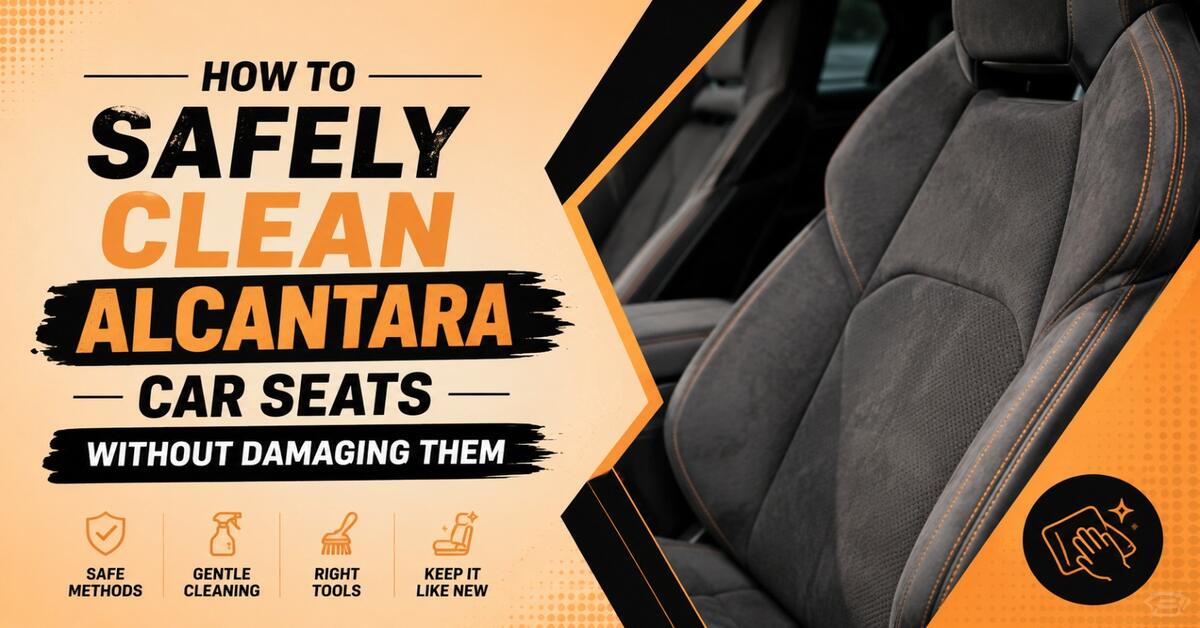
Cleaning Alcantara requires gentle techniques because it is a synthetic microfiber, not real leather. This guide explains how to safely clean Alcantara car seats without damaging them using a four-step process: vacuuming, spot-treating, sectional cleaning, and nap restoration. Taking 45 to 60 minutes per seat, controlling moisture is the single biggest factor for success.
Before You Start
- Total Time: 45 to 60 minutes per seat.
- Difficulty: Medium (Requires patience and moisture control).
- Estimated Cost: $30 to $50 for professional-grade supplies.
- Prerequisites: Work in a shaded area. A hot interior causes cleaners to dry prematurely, leaving soap residue.
- Tools and Materials Required:
- Vacuum cleaner with a soft bristle brush attachment.
- 3 to 4 clean, white, lint-free microfiber towels.
- Dedicated cleaner: Sonax Alcantara Cleaner, Koch Chemie Pol Star, or a 1:20 mix of neutral soap and distilled water.
- Soft horsehair upholstery brush (do not use nylon).
- 500 ml of pure distilled water.
The 4-Step Cleaning Process
Step 1: Vacuum the Surface
Remove all loose dirt, dust, and abrasive crumbs using medium suction power before introducing any liquids.
Attach the soft bristle brush to your vacuum and glide it over the seat with zero downward pressure. For tight seams, place two fingers between the plastic crevice tool and the fabric to prevent accidental plastic gouges.
- Success Checkpoint: You will know it worked when the seams are completely free of sand and the fabric color looks slightly lighter.
- Common Mistake: Pressing hard with the vacuum nozzle to dig out dirt. This breaks the delicate synthetic fibers and creates permanent scratch marks.
Step 2: Pre-Treat Isolated Stains
Chemically break down heavy oils, ink, or coffee spots before addressing the entire seat panel.
Apply 1 to 2 sprays of your Alcantara cleaner directly onto a folded corner of a white microfiber cloth. Press the damp cloth onto the stain and blot gently from the outside edges inward to prevent spreading. Let the cleaner sit on the stain for exactly 2 minutes without scrubbing.
- Success Checkpoint: You will know it worked when the stain begins transferring off the seat and onto your white towel.
- Common Mistake: Spraying cleaner directly onto the stain. This over-saturates the foam backing underneath, leading to water rings as it dries.
Step 3: Sectional Deep Clean and Rinse
Lift embedded body oils and general dirt from the fabric by working in strictly controlled 20×20 cm sections.
Apply 3 to 4 sprays of cleaner directly into the bristles of your horsehair brush. Agitate the 20×20 cm section using light, overlapping circular motions. Immediately dampen a fresh microfiber cloth with 20 ml of distilled water, wipe the section to remove the dirt and soap, and follow up instantly with a dry towel to absorb the moisture. Repeat this process section by section until the panel is complete.
- Success Checkpoint: You will know it worked when your damp rinse towel pulls up a gray/brown film, and the seat feels only slightly damp, never wet.
- Common Mistake: Agitating the entire seat before wiping it down. The cleaner will dry on the first sections you scrubbed, locking the dirt back into the fibers.
Step 4: Dry and Restore the Nap
Realign the microfibers so the material dries with its original, soft factory texture.
While the seat is still slightly damp, take a completely dry horsehair brush and comb the fabric in one uniform direction (usually back-to-front or top-to-bottom). Leave the car doors or windows open and allow the seat to ambient air dry entirely before sitting on it.
- Success Checkpoint: You will know it worked when the seat is totally dry to the touch, visually uniform, and feels soft rather than crunchy.
- Common Mistake: Using a hairdryer or heat gun to speed up drying. Artificial heat permanently melts the synthetic polyester fibers.
Common Mistakes and How to Fix Them
The Fabric Feels Stiff or Crunchy
- Cause: Excess cleaner or soap residue dried inside the microfibers.
- Fix: Dampen a clean microfiber cloth with pure distilled water. Wipe the crunchy area firmly but smoothly to re-dissolve the soap. Take a dry horsehair brush, comb the nap in one direction while damp, and let it air dry again.
Small Fabric Balls Appear (Pilling)
- Cause: Aggressive scrubbing, heavy sliding in and out of the vehicle, or using stiff nylon brushes.
- Fix: Purchase a dedicated electric fabric shaver or use a clean disposable razor. Stretch the Alcantara tight with one hand and shave the surface with extremely light pressure to cut the pills off without damaging the underlying weave.
Dark Water Rings and Edges
- Cause: Uneven drying, using tap water with high mineral content, or over-saturating one specific spot.
- Fix: You must clean the entire affected panel from seam to seam. Dampen a towel with distilled water and wipe the panel evenly so the moisture level is uniform across the entire surface. Brush the nap and let it dry evenly.
Process Variations for Different Conditions
Routine Maintenance Cleaning
If the seats are not visibly stained but simply dusty, skip the chemical cleaners entirely. After vacuuming, dampen a microfiber towel with warm distilled water, wring it out until it is barely damp, and wipe the seats down in one direction. Brush the nap and let it dry. This takes only 10 minutes per seat.
Heavily Matted or Greasy Alcantara (Steaming)
For heavily soiled steering wheels or seat bolsters where the Alcantara is matted flat from skin oils, wrap a clean microfiber towel over the nozzle of a steam cleaner. Pass the steam-wrapped towel lightly over the matted area. The heat breaks down the grease while the towel immediately absorbs it. Never apply bare steam directly to the fabric.
Time and Cost Breakdown
- Total Time Investment: Expect 5 minutes for vacuuming, 5 minutes for spot treatment, 15 minutes for sectional deep cleaning, and 20 to 30 minutes for ambient drying. Total active working time is around 25 minutes per seat.
- Supply Cost: Professional Alcantara cleaners cost $15–$25 per bottle. A quality horsehair brush is $10–$15. Distilled water and towels cost under $10. Total investment is usually $30 to $50, yielding enough supplies to clean an interior 10+ times.
Frequently Asked Questions
Can I use alcohol or bleach on Alcantara?
No. Harsh solvents like isopropyl alcohol, bleach, and heavy alkaline degreasers will strip the factory protective coating, weaken the synthetic blend, and cause permanent discoloration. Always use pH-neutral cleaners.
How often should I clean Alcantara seats?
Perform a dry vacuum and a damp distilled water wipe-down every 4 to 6 weeks. A chemical deep clean with a horsehair brush is only necessary once or twice a year, depending on use.
Can I apply a ceramic coating or fabric guard afterward?
Yes, but it must be an Alcantara-specific or synthetic-safe hydrophobic spray (like Gtechniq I1 Smart Fabric). Apply it only after the seat is 100% dry and vacuumed. Do not use generic leather conditioners or heavy waxes.
Ultimately, knowing how to safely clean Alcantara car seats without damaging them comes down to patience. By never applying liquid directly to the fabric, cleaning in small sections, and strictly avoiding heat, you will perfectly restore the material’s premium matte finish every time.