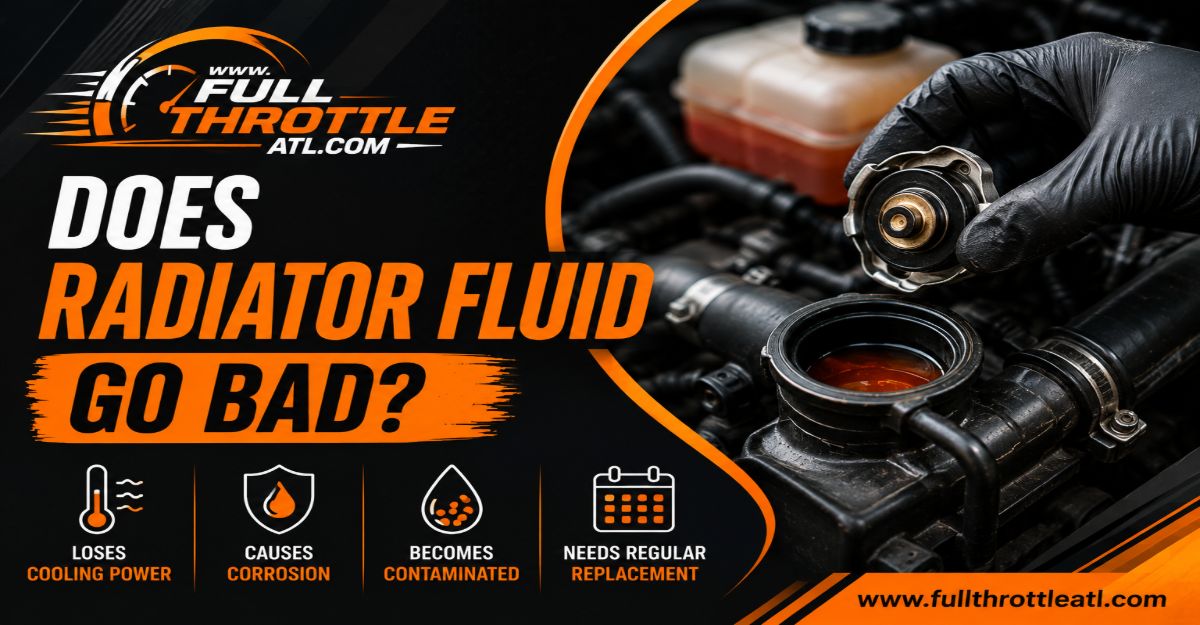
Yes, radiator fluid (commonly known as antifreeze or coolant) goes bad over time as its critical chemical corrosion inhibitors, rust fighters, and pH buffers deplete and become acidic. While the base liquids-distilled water and ethylene or propylene glycol-do not easily break down, the microscopic additive package eventually exhausts itself from thousands of thermal cycles, leaving engine metals unprotected.
Key Facts at a Glance
- Average Lifespan: 2 years / 30,000 miles for traditional IAT; up to 5 years / 150,000 miles for modern OAT formulations.
- Optimal pH Range: 7.5 to 10.0 (alkaline). Fluid reading below 7.0 is acidic and corrosive.
- Standard Mixture: 50/50 ratio of coolant concentrate and distilled water, yielding protection down to -34°F (-36°C) and up to 265°F (129°C) at 15 psi.
- Electrolysis Threshold: Any digital multimeter DC voltage reading exceeding 0.4V inside the coolant indicates active destructive electrolysis.
- Service Costs: $15 to $30 per gallon for fluid; $100 to $250 for a professional coolant flush.
Why and How Does Radiator Fluid Go Bad?
Radiator fluid goes bad because its functional additive package is gradually consumed by extreme thermal stress, mechanical friction, and electrochemical reactions within the cooling system. Coolant is not a permanent fluid; it is a dynamic chemical shield that degrades in distinct phases.
The degradation sequence unfolds as follows:
- Additive Consumption: As the water pump circulates fluid through the engine block, anti-corrosive chemicals (such as silicates, phosphates, or organic acids) sacrifice themselves to coat internal aluminum, cast iron, and brass surfaces.
- Acidification: Once inhibitors are completely consumed, thermal breakdown and exposure to trace combustion gases cause the fluid’s pH to drop below 7.0, turning the mixture acidic.
- Electrolytic Corrosion: Acidic coolant acts like a battery electrolyte, initiating galvanic corrosion that strips aluminum cylinder heads and pits iron block walls.
- Precipitation and Sludge: Spent chemicals, metal oxides, and mineral fallout combine to form a thick, abrasive sludge that clogs narrow radiator tubes and heater core channels.
What Are the Signs That Coolant Has Gone Bad?
Coolant has gone bad when the fluid changes color, develops visible contamination, or fails to maintain engine thermal stability during standard operation. Recognizing these symptoms early prevents catastrophic head gasket failure and localized engine overheating.
- Discoloration and Cloudiness: Fresh green, orange, pink, or blue fluid turns into a murky brown, rusty orange, or milky gray mixture.
- Particulate Contamination: Floating flakes of rust, scale, or an oily sheen appear inside the coolant recovery reservoir, signaling internal component breakdown or oil contamination from a failing oil cooler.
- Sweet, Syrupy Odor: A distinct sweet smell inside the vehicle cabin indicates a compromised heater core leaking vapor into the HVAC system.
- Loss of Cabin Heat: A clogged heater core blocked by degraded coolant sludge prevents warm liquid from transferring heat to the passenger compartment.
- Chronic Temperature Spikes: The engine temperature gauge fluctuates or climbs during low-speed driving because diminished thermal transfer efficiency reduces radiator cooling capacity.
How Long Does Radiator Fluid Last?
Radiator fluid lasts anywhere from 2 years up to 5 years depending strictly on the chemical formulation and vehicle manufacturer specifications. Coolant longevity is divided into three primary chemical categories:
| Coolant Type | Inhibitor Chemistry | Typical Color | Lifespan / Mileage | Primary Application |
| IAT (Inorganic Acid Technology) | Silicates and Phosphates | Green | 2 years / 30,000 miles | Older vehicles with copper/brass radiators and lead solder. |
| OAT (Organic Acid Technology) | Carbon-based Organic Acids | Orange, Red, Purple | 5 years / 150,000 miles | Modern multi-metal engines; phosphate-free formulations. |
| HOAT (Hybrid Organic Acid Tech) | Organic Acids + Silicates | Yellow, Turquoise, Blue | 5 years / 100,000 miles | Modern passenger cars requiring fast-acting protection paired with longevity. |
How Can You Test Radiator Fluid at Home?
You can test radiator fluid at home using four distinct diagnostic methods ranging from visual inspection to electrochemical voltage measurement. Testing eliminates guesswork and ensures you replace fluid based on condition rather than arbitrary calendar dates.
- Visual and Olfactory Inspection: Inspect the overflow reservoir exclusively when the engine is completely cold. Look for sediment, discoloration, or oil contamination.
- Chemical Test Strips: Dip a specialized coolant test strip into the fluid reservoir to compare the color pad against the manufacturer’s chart, verifying reserve alkalinity and freeze protection limits.
- Refractometer or Hydrometer: Measure the specific gravity of the fluid to determine the exact glycol concentration percentage and corresponding freeze-protection point.
- Multimeter Stray Current Test: Set a digital multimeter to DC volts. Place the negative probe on the negative battery terminal and submerge the positive probe directly into the coolant without touching metal. A reading above 0.4 volts confirms destructive stray electrical currents are actively destroying your cooling system.
What Happens If You Do Not Change Bad Coolant?
Failing to change bad coolant results in severe mechanical damage, including water pump impeller erosion, radiator blockage, core leaks, and total engine seizure from overheating.
When acidic coolant is left in service, it attacks the weakest points of the cooling system. Aluminum components develop deep pitting holes, and brass heater cores spring internal leaks. Furthermore, abrasive scale deposits destroy water pump mechanical seals, causing external coolant leaks and immediate bearing failure. The cost of replacing an engine block or clogged radiator vastly exceeds the simple expense of routine fluid maintenance.
What Are the Most Common Coolant Maintenance Mistakes?
Coolant maintenance mistakes include mixing incompatible chemical formulations, utilizing untreated tap water, and opening pressurized radiator caps while the engine is hot. Avoiding these critical errors preserves cooling system integrity.
- Mixing Incompatible Coolants: Combining IAT (green) and OAT (orange/red) coolants triggers an instantaneous chemical reaction that turns the liquid into a thick, muddy gel, plugging engine passages permanently.
- Using Tap Water for Dilution: Tap water contains dissolved minerals like calcium and magnesium that precipitate under heat, forming insulating scale layers inside the engine. Always use distilled water.
- Opening a Hot System: Operating cooling systems under 15 psi increases water’s boiling point. Removing a hot radiator cap instantly drops the pressure, causing superheated coolant to flash-boil and spray violently, causing severe burns.
- Ignoring Minor Fluid Loss: Closed cooling systems never consume fluid. If your reservoir level drops, you have an active external or internal leak that requires immediate pressure testing.
Frequently Asked Questions
Can you add water to radiator fluid in an emergency?
You can add distilled water in an emergency to top off a low cooling system, provided you correct the concentration ratio as soon as possible. Adding tap water should be strictly avoided unless necessary to prevent engine seizure, as mineral deposits begin forming immediately. If you add pure water, test the freeze protection level with a refractometer before winter freezing temperatures arrive.
Does coolant go bad sitting in a sealed bottle?
Coolant stored in an unopened, tightly sealed original container has an indefinite shelf life, typically exceeding 5 to 8 years. Once a container is opened, exposure to atmospheric air and moisture can initiate slow oxidation or evaporation of water content, though the concentrated chemical additives remain stable if kept in a temperature-controlled environment.
Why does coolant turn brown?
Coolant turns brown when the rust inhibitors and pH buffers are completely depleted, allowing the acidic liquid to corrode cast iron engine blocks and steel components. The suspended iron oxide mixes with the degraded fluid, creating a muddy brown slurry that coats cooling system walls and reduces heat dissipation efficiency.
Is it necessary to flush the cooling system when changing fluid?
Flushing the cooling system is necessary whenever switching between different coolant chemistries (such as moving from IAT to OAT) or when removing heavy sludge and rust contamination. A standard drain-and-fill only replaces about 60% of total system fluid because trapped liquid remains inside the heater core and engine block. A complete chemical flush ensures all spent acids and debris are fully purged.
What causes coolant to smell sweet inside the car?
Coolant smells sweet inside the car because ethylene glycol contains sweet-tasting compounds that produce a syrupy odor when heated. This symptom confirms a coolant leak within the vehicle’s heating matrix, typically originating from a cracked heater core or loose hose clamps near the passenger compartment firewall.