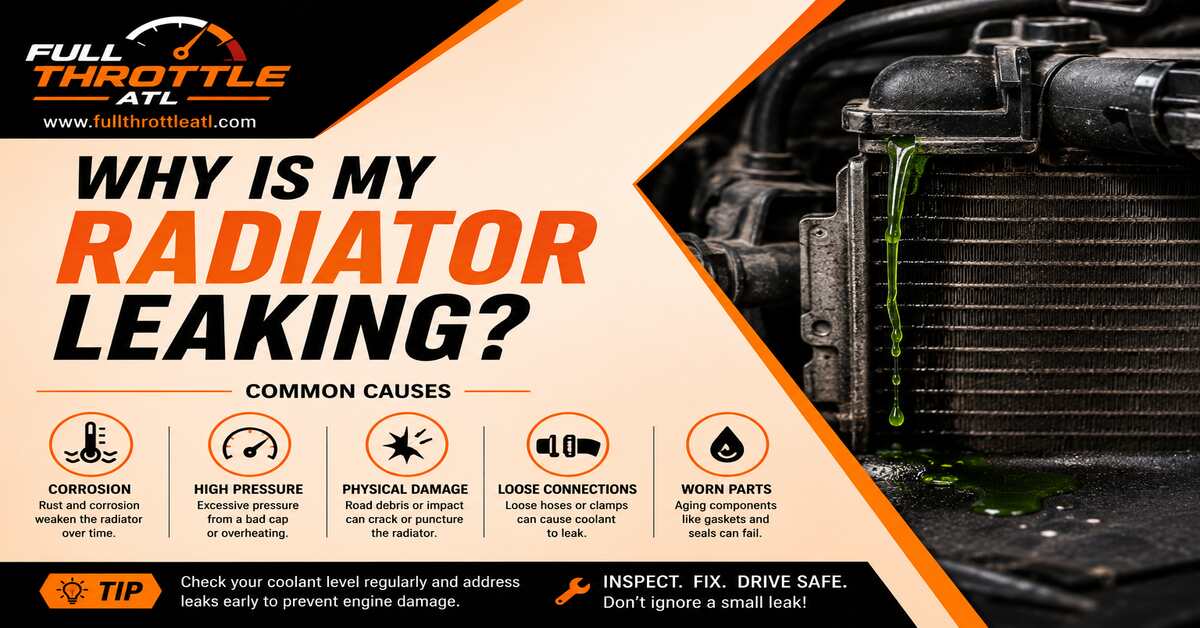
A car radiator leaks primarily due to internal corrosion from expired coolant, physical degradation of rubber hoses, or a failed pressure cap unable to regulate the system’s 13 to 16 PSI. While minor hose leaks cost under $100 to resolve, persistent coolant loss often signals severe underlying failures like stray electrical current or a blown head gasket.
At a Glance: Key Facts
- Lifespan Limit: Coolant turns acidic after 5 years or 100,000 miles, actively eating away at the aluminum core to create pinhole leaks.
- Cap Rating: A faulty radiator cap that fails to hold 13–16 PSI allows coolant to boil prematurely and escape as steam.
- The Multimeter Test: Stray electrical currents exceeding 0.3 volts in your coolant will destroy a new radiator from the inside out within months.
- The “Milkshake” Warning: A pink, creamy sludge in your radiator means the internal transmission cooler has breached, threatening catastrophic transmission failure.
- Repair Economics: Fixing a minor hose clamp costs $50, whereas a full radiator replacement ranges from $300 to $900+.
What are the early warning signs of a radiator failure before it leaks?
Early warning signs of radiator failure include a sweet, syrupy smell under the hood, small puddles of brightly colored fluid under the car, or unexplained drops in the coolant overflow reservoir. You may also notice white or green crusty mineral deposits forming around the radiator seams and hose connections. Catching these precursors allows you to replace components before a catastrophic blowout leaves you stranded.
How can I tell the difference between a coolant leak and normal AC condensation?
You can distinguish a coolant leak from air conditioning condensation by checking the color, texture, and location of the fluid puddle. Coolant is brightly colored-typically green, pink, orange, or blue-feels slick or sticky to the touch, and carries a distinct sweet odor. AC condensation is completely clear, odorless, and water-thin, and it drips directly from the evaporator drain tube underneath the passenger-side floorboards rather than the front bumper.
What causes a radiator to rust and develop pinhole leaks from the inside out?
A radiator develops internal rust and pinhole leaks when chemical corrosion strips away the protective silicate layers inside the metal core. Modern coolants contain corrosion inhibitors that deplete over time. Once these inhibitors break down after roughly 5 years or 100,000 miles, the fluid becomes acidic. This acidic mixture chemically attacks the thin aluminum or brass fins, eating microscopic holes through the metal walls until pressurized fluid forces its way out.
How does a bad radiator cap cause coolant to boil over or leak?
A bad radiator cap causes leaks by failing to maintain the 13 to 16 PSI of pressure required to raise the boiling point of the engine coolant. When the internal spring weakens, the cooling system loses pressure prematurely. This allows normal operating temperatures of 180 to 210 degrees Fahrenheit to trigger boiling, creating vapor pockets that force excess fluid past the relief valve and out into the overflow reservoir or onto the ground.
What is electrochemical degradation in radiator hoses?
Electrochemical degradation is a microscopic breakdown of rubber radiator hoses caused by an electrical reaction between the metal engine fittings, coolant, and rubber compound. As current flows through the cooling system, it attacks the inner lining of the hose from the inside. The hose may look fine on the exterior, but when squeezed near the clamps, it will feel spongy, soft, or collapsed, indicating structural failure and imminent bursting.
What happens if you mix incompatible types or colors of coolant?
Mixing incompatible coolant types-such as combining traditional Inorganic Additive Technology green fluid with Organic Acid Technology orange or red coolants-causes the chemical inhibitors to neutralize or precipitate out of the liquid. This chemical reaction creates a thick, gel-like sludge that coats the interior passages of the radiator, blocks the heater core, and severely reduces heat transfer, leading to localized engine overheating.
Why does my radiator leak only when the engine is cold or in freezing weather?
A radiator leaks only when cold because metals and rubber contract significantly as temperatures drop. In sub-freezing weather, hose clamps and gaskets shrink, creating microscopic gaps where pressurized or unpressurized fluid can escape. Once the engine starts and reaches operating temperature, the thermal expansion of the components forces the materials to expand, sealing the gap and stopping the drip.
How do I find a hidden coolant leak using a pressure tester?
You can locate a hidden coolant leak by renting a cooling system pressure tester from an auto parts store and pumping the cold system up to 15 PSI with the engine turned off. This method pressurizes the cooling system safely without the interference of spinning cooling fans or scalding steam. With the system under pressure, scan all hoses, the water pump, and the radiator core for hissing sounds, weeping seams, or dripping fluid.
How do I test for stray current electrolysis with a multimeter?
You test for stray current electrolysis by setting a digital multimeter to direct current volts, touching the black negative lead to the negative battery terminal, and dipping the red positive lead directly into the liquid inside the coolant reservoir without touching any metal sides. A reading below 0.3 volts is normal, but any measurement exceeding 0.3 volts indicates a faulty engine ground strap is routing stray electricity through your coolant and destroying the radiator.
What causes the “strawberry milkshake” transmission fluid mixture?
The “strawberry milkshake” appearance inside a cooling system is caused by a structural internal breach in the built-in automatic transmission oil cooler located inside the radiator tanks. When the internal wall separating the transmission fluid and engine coolant fails, the two fluids mix together under pressure. This pink, frothy sludge destroys transmission clutches and seals instantly, requiring an immediate radiator replacement and a comprehensive transmission overhaul.
How does a blown head gasket force coolant out of the radiator?
A blown head gasket forces coolant out of the radiator by allowing high-pressure combustion gases from the engine cylinders to leak directly into the cooling jacket. Because combustion pressures reach hundreds of PSI while the cooling system is rated for only 16 PSI, these gases overwhelm the radiator cap and force coolant out of the system. Fixing the resulting external leak will not resolve the issue, as the trapped combustion pressure will simply blow a new leak elsewhere.
Can I safely drive a car with a leaking radiator?
You cannot safely drive a car with a leaking radiator except for very short distances in an emergency while continuously topping off the fluid with water or coolant. Driving with low coolant creates severe hot spots inside the aluminum cylinder head and iron engine block, which can warp metal components, blow head gaskets, or crack the block entirely, turning a minor radiator repair into a total engine replacement.
Is liquid “stop leak” safe to use in my cooling system?
Liquid stop leak is generally unsafe for long-term use and should be reserved strictly as a temporary roadside emergency measure. Stop leak products circulate through the cooling system and plug holes by solidifying upon contact with air. Unfortunately, the chemical sealants cannot distinguish between a radiator pinhole and the microscopic passages of your heater core, frequently clogging the heating system and requiring expensive system flushes later.
How much does it cost to fix or replace a leaking car radiator?
Repairing a radiator leak ranges widely based on the root cause and the specific vehicle make and model. A minor fix involving a loose hose clamp costs between $50 and $150. A complete radiator replacement typically costs between $300 and $900 for standard vehicles, while luxury or high-performance cars can exceed $1,000 due to labor complexity and part availability.
Why is my home central heating radiator leaking and how do I fix it?
A central heating radiator leaks due to internal corrosion creating pinholes, loose union nuts connecting the pipes, or worn packing material around the valve spindles. Pinhole corrosion requires replacing the entire radiator unit. For union nut leaks, loosening the nut and wrapping the internal brass olive with PTFE plumbing tape usually solves the issue. For valve spindle leaks, slightly tightening the packing gland nut beneath the plastic adjuster cap stops the weeping.
The Bottom Line
A radiator leak is rarely an isolated plumbing issue; it is a vital diagnostic signal pointing to chemical, electrical, or thermal stress within your engine. Whether you are dealing with acidic coolant corrosion, a failed pressure cap, or destructive stray current electrolysis, addressing the root cause immediately prevents minor fluid loss from escalating into catastrophic engine failure. Always verify system pressure and test for hidden electrical currents before installing replacement components.