Every car owner eventually faces the dreaded morning when turning the key yields nothing more than a series of rapid clicks or complete silence. Replacing a dead car battery is a standard rite of passage in vehicle ownership. However, once the new power source is successfully installed under the hood, a crucial question remains: what should you do with the heavy, dead unit sitting in your garage?
Learning how to recycle a car battery is not just about clearing out clutter; it is a critical environmental responsibility. Traditional automotive batteries are packed with hazardous materials that demand specialized handling. Tossing an old battery into the household trash or abandoning it behind a garage is illegal, dangerous, and environmentally catastrophic. This comprehensive guide will walk you through the step-by-step process of safe handling, proper transportation, and the best local facilities where you can drop off your old unit for responsible processing.
Why Car Battery Recycling is Non-Negotiable
Traditional internal combustion vehicles rely heavily on flooded lead-acid batteries. While these units are exceptionally efficient at delivering massive surges of electrical current to start engines, their chemical composition makes them hazardous waste.
The Toxic Trio: Lead, Sulfuric Acid, and Plastic
Inside a standard car battery, you will find hundreds of pounds of lead plates suspended in a solution of sulfuric acid, all housed within a durable polypropylene plastic casing.
- Lead: This heavy metal is a potent neurotoxin. If lead from a discarded battery seeps into local soil or groundwater supplies, it accumulates in ecosystems and poses severe health risks to humans and wildlife, including neurological damage and developmental issues in children.
- Sulfuric Acid: The electrolyte liquid inside the battery is highly corrosive. If a discarded casing cracks or breaks open in a regular landfill, the acid can burn through surrounding materials, contaminate water tables, and destroy local vegetation.
- Plastic Casing: The polypropylene shell takes centuries to decompose in a landfill. Fortunately, plastic is one of the easiest materials to melt down and reshape into new automotive components.
By choosing to recycle your car battery, you ensure that up to ninety-nine percent of these components are recovered, neutralized, and repurposed into brand new batteries and industrial products.
Anatomy of a Lead-Acid Car Battery
Before diving into the removal process, understanding how your car battery is built helps explain why specific safety protocols are mandatory. A standard automotive battery consists of alternating lead plates immersed in an electrolyte mixture of water and sulfuric acid.
When terminals are accidentally bridged by a metal object like a wrench, a short circuit occurs. This creates a massive surge of electrical current, sparking intense heat that can cause the battery casing to rupture, spraying boiling sulfuric acid and toxic gases into the air. Respecting these components during removal and transport prevents serious injury.
Step-by-Step Guide: Preparing and Removing Your Old Battery Safely
Before you can transport your battery to a recycling facility, you must safely detach it from your vehicle. Rushing this process can lead to electrical damage to your car or personal injury.
1. Gather Your Safety Gear and Tools
Never attempt to handle a car battery without proper personal protective equipment.
- Heavy-duty rubber or nitrile gloves
- ANSI-approved safety glasses or goggles
- A box wrench or socket set (typically ten millimeters or thirteen millimeters)
- A baking soda and water solution to neutralize minor acid residue
- A sturdy, thick plastic tray or heavy-duty plastic garbage bag
2. Disconnect the Terminals Properly
The sequence in which you disconnect the battery cables is critical for preventing accidental electrical shorts.
- Locate the Negative Terminal: Find the negative terminal, marked with a minus sign or the letters NEG, which is usually connected to a black cable. Using your wrench, loosen the nut on the terminal clamp and lift the cable completely off the post. Tuck it aside so it cannot spring back and touch the terminal.
- Locate the Positive Terminal: Find the positive terminal, marked with a plus sign or the letters POS, which is usually connected to a red cable. Loosen its nut and remove the cable.
- Pro Tip: Always remember the golden rule of automotive electrical work: negative off first, negative on last.
3. Detach the Hold-Down Clamp
Batteries are heavy and subject to violent vibrations while driving. Manufacturers secure them using a bottom bracket or a top-strap hold-down clamp bolted to the vehicle frame. Remove this bracket with your socket set and lift the battery straight up out of its tray, keeping your back straight and your knees bent to protect against strain.
How to Package and Transport Your Car Battery Safely
Once the battery is free from the engine bay, you need to transport it without risking acid spills inside your vehicle interior.
Keep It Upright at All Times
Automotive batteries are not sealed completely airtight. They feature small vent holes to allow hydrogen gas to escape during normal charging cycles. If you tilt or lay a battery on its side during transport, sulfuric acid will leak out of these vents, eating through upholstery, carpeting, or the trunk floor of your car. Always keep the unit completely vertical.
Use a Protective Containment Basin
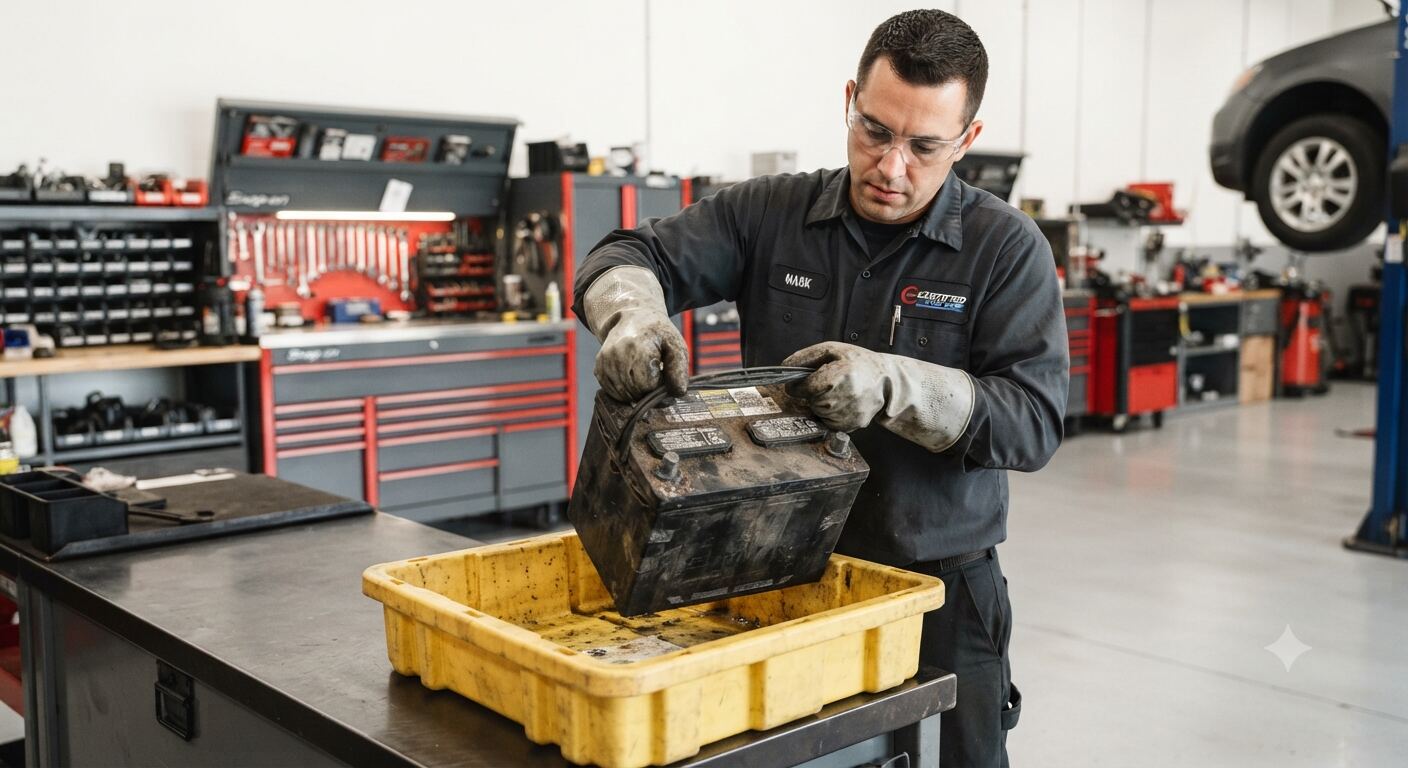
Place the battery inside a thick plastic storage bin, a heavy-duty garbage bag, or a specialized battery transport tray. This provides an extra layer of defense in case the old outer casing has microscopic cracks or minor leaks.
Secure the Cargo
Place the container on a flat portion of your vehicle floor, such as the rear passenger footwell or a level trunk floor. Wedge it securely with blocks or surrounding items so it cannot slide, tip over, or shift during sharp turns and sudden stops.
Quick Reference Data Table
To help you plan your recycling trip efficiently, review the key operational parameters below:
| Metric / Parameter | Details & Requirements |
| Primary Tools Needed | Wrench set (10mm/13mm), safety glasses, heavy-duty gloves |
| Estimated Time Required | 15 to 30 minutes for removal and packaging |
| Difficulty Level | Beginner to Intermediate |
| Estimated Cost | Free (Often generates cash back or core charge savings) |
| Legal Compliance | Mandatory recycling; illegal to discard in municipal trash |
| Key Safety Hazard | Corrosive sulfuric acid and toxic lead exposure |
Where to Drop Off Your Old Car Battery
Fortunately, recycling infrastructure for lead-acid automotive batteries is well established. Several convenient options are available to everyday drivers.
Battery Retailers and Automotive Workshops
Most major auto parts retailers, national service chains, and local mechanic shops accept old car batteries. In many cases, if you are purchasing a replacement battery from them, they will accept your old unit on the spot.
- Core Charges: When you buy a new battery, retailers often add a “core charge” to the bill. This is a refundable deposit designed to incentivize recycling. When you bring your old battery back within a specified window, the retailer refunds this fee entirely, saving you money.
Scrap Metal Yards
Certified metal recyclers and scrap yards routinely accept lead-acid units for large-scale processing. Facilities like specialized metal processing plants purchase scrap batteries by weight. While you may not make a fortune, returning a heavy lead battery to a scrap yard often puts a modest amount of cash directly into your pocket.
Municipal E-Waste Drop-Off Points and Environmental Agencies
If you are cleaning out a garage and have an old battery that is not tied to a recent retail purchase, check local municipal waste resources. Local environmental agencies or city sanitation departments maintain designated household hazardous waste collection sites. Use online directories provided by local environmental protection organizations to locate approved collection facilities near you.
The Financial Perks of Recycling Your Car Battery
Beyond protecting local ecosystems and complying with environmental laws, recycling your car battery offers tangible financial benefits. Because lead and polypropylene are valuable commodities in global manufacturing, recycling plants pay processing facilities for scrap material. Retailers pass these incentives down to consumers through core charge refunds, and scrap yards reward you with direct payouts. Treating your old battery as valuable scrap rather than garbage keeps money in your wallet.
Frequently Asked Questions (FAQ)
Can I throw a car battery in the regular trash?
No. Disposing of a car battery in household trash or municipal landfills is strictly illegal in most jurisdictions. Car batteries contain hazardous heavy metals and corrosive acids that pose severe risks to sanitation workers, public health, and local groundwater supplies.
How long do car batteries typically last before needing replacement?
Most standard lead-acid car batteries last between three and five years. Factors such as extreme weather, frequent short trips, and poor alternator health can shorten this lifespan significantly. Once your battery starts struggling to crank the engine, it is time to plan a replacement and recycling trip.
Can I transport a leaking car battery in my trunk?
Transporting a leaking battery requires extreme caution. You must place the unit inside a heavy-duty, acid-resistant plastic container or thick trash bag to catch any dripping fluid. Keep your vehicle windows cracked for ventilation, and drive straight to the nearest recycling facility to minimize exposure to corrosive vapors.
What happens to the materials after a car battery is recycled?
Once a battery reaches a recycling facility, it is crushed into small chips in specialized machinery. The heavier lead and plastic parts sink, while the plastic floats to the top to be washed, melted, and molded into new battery casings. The lead pieces are smelted down into fresh ingots for manufacturing new battery grids, and the sulfuric acid is either neutralized and safely treated or converted into usable industrial sulfates.
Conclusion
Recycling your car battery is a simple, highly impactful task that protects the environment, keeps hazardous materials out of local landfills, and often puts money back in your pocket through core charge refunds. By following proper safety gear protocols, disconnecting the negative terminal first, keeping the unit upright during transport, and dropping it off at a certified retailer or scrap yard, you complete the sustainable lifecycle of your vehicle’s power source.
Quick Safety Tip: Always wash your hands thoroughly with soap and water immediately after handling an old automotive battery, even if you wore heavy-duty gloves throughout the entire removal process.