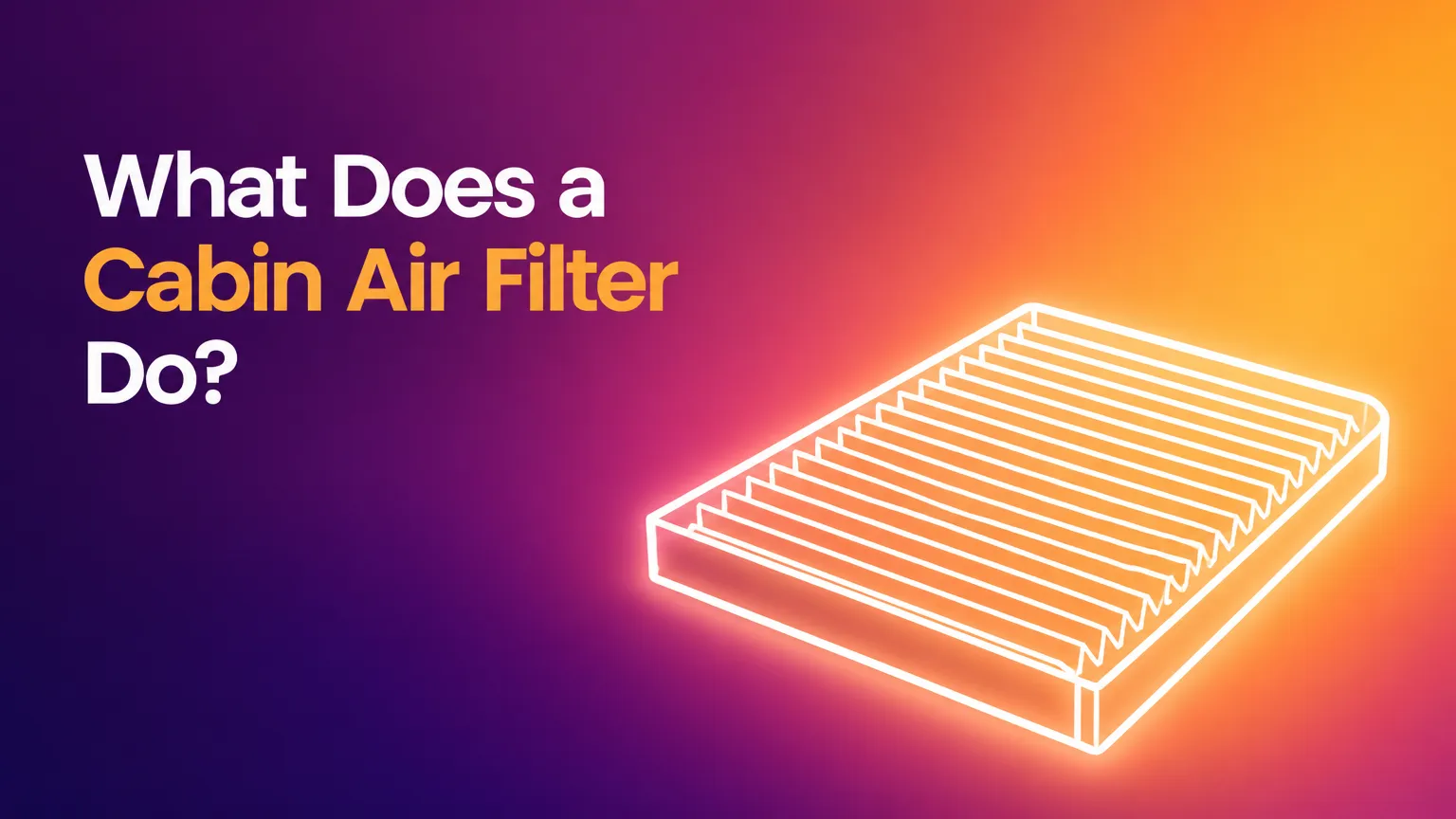
A cabin air filter cleans the air entering a vehicle’s interior by trapping dust, pollen, mold spores, pollutants, and toxic gases before they reach the passenger cabin. Positioned within the HVAC intake system, it protects passenger respiratory health while preventing debris from clogging the air conditioning evaporator core and heater matrix.
At a Glance
- Particle Capture: High-efficiency cabin filters block up to 99% of airborne particles between 0.3 and 3.0 microns, including brake dust and pollen.
- Gas Adsorption: Charcoal and activated carbon layers adsorb harmful gases like nitrogen dioxide (NO2) and sulfur dioxide (SO2).
- HVAC Protection: Clogged filters restrict airflow, causing evaporator cores to freeze and blowing motors to overheat.
- Replacement Rules: Standard replacement intervals range from 12,000 to 15,000 miles, but extreme dust, smoke, or damp climates shorten lifespan to under 2,000 miles.
What Contaminants Does a Cabin Air Filter Remove?
A cabin air filter removes solid airborne particulates, biological allergens, and gaseous pollutants before they enter the vehicle cabin. Its effectiveness depends directly on the physical particle size (measured in microns) and the filtering material used.
| Contaminant Category | Specific Pollutants | Particle Size Range | Filter Material Required |
|---|---|---|---|
| Macro Allergens | Plant pollen, road dust, insect fragments | 10 to 100 microns | Standard Pleated Paper / Synthetic |
| Micro Particulates | Mold spores, soot, metallic brake dust | 0.3 to 3.0 microns | High-Efficiency Electrostatic Media |
| Gaseous Toxins | Nitrogen dioxide (NO2), sulfur dioxide (SO2), ozone (O3), odors | Molecular level | Activated Carbon / Charcoal Layer |
| Pathogens & Smoke | Wildfire smoke, bacteria, airborne viruses | 0.1 to 0.3 microns | Medical-Grade HEPA Filter |
Standard particulate media capture larger debris through mechanical straining and electrostatic attraction. Activated carbon layers utilize porous molecular structures—boasting an internal surface area up to 1,000 square meters per gram of carbon—to trap gaseous molecules through chemical adsorption.
Is a Cabin Air Filter the Same as an Engine Air Filter?
No, a cabin air filter and an engine air filter serve two completely different systems in a vehicle and cannot be interchanged.
- The cabin air filter cleans the outside air flowing through the vehicle’s heating, ventilation, and air conditioning (HVAC) system into the passenger compartment to protect human health.
- The engine air filter sits inside the engine’s intake box, filtering air before it enters the combustion chambers to prevent dirt and silica from scoring cylinder walls and damaging fuel injectors.
Replacing or inspecting one does not address the condition of the other; both require independent maintenance schedules.
Where Is the Cabin Air Filter Located in a Car?
In over 80% of modern passenger vehicles, the cabin air filter is located directly behind the primary glove compartment inside the interior dashboard. Replacing it requires unclipping the glovebox stop-arms and lowering the door to access the filter housing tray.
Alternative locations depend on manufacturer engineering:
- Under the Hood / Firewall Base: Common in European vehicles (e.g., BMW, Audi), where the filter housing resides near the windshield wiper cowl in the engine bay.
- Under the Driver or Passenger Footwell: Positioned underneath the center console trim near the accelerator pedal or kick panel (frequently found in modern Fords and Volvos).
- Dual Air Intakes: Some luxury and electric vehicles utilize two filters—a pre-filter under the hood and a secondary HEPA or carbon unit inside the interior ductwork.
What Are the Signs of a Dirty or Clogged Cabin Air Filter?
The four primary signs of a dirty cabin air filter are weak HVAC airflow, persistent musty odors, elevated fan noise, and poor window defrosting performance.
- Drastic Airflow Reduction: The airflow from dashboard vents drops noticeably, even when the fan blower speed is set to maximum.
- Persistent Whistling or Excessive Fan Noise: Restricting air intake forces the blower motor to work harder against negative pressure, creating strain sounds or whistling at higher fan speeds.
- Musty or Damp Odors: Moisture combined with trapped organic dust creates mold and bacterial colonies, causing a distinct “gym sock” smell when the fan starts.
- Delayed Fog Clearance: Reduced volume of dry, conditioned air slows down windshield demisting, leaving interior glass foggy in humid or cold conditions.
Can a Dirty Cabin Air Filter Ruin Your AC System?
Yes, an excessively dirty cabin air filter can severely damage a vehicle’s air conditioning and heating hardware, leading to expensive mechanical repair bills.
Restricted airflow across the system causes two distinct mechanical failures:
- Frozen AC Evaporator Core: The HVAC system relies on constant warm air passing over the liquid refrigerant coils. When air is choked off by a clogged filter, the evaporator core temperature drops below 32∘F (0∘C), causing condensed water vapor to freeze solid over the aluminum fins. This blocks air completely and can crack the core.
- Blower Motor Overheating: The electric blower motor depends on the incoming airstream to cool its internal electrical windings. Operating against severe resistance increases current draw and operating temperature, burning out the motor or blowing the thermal fuse.
Does a Bad Cabin Air Filter Cause Foggy Windows?
Yes, a clogged cabin air filter causes interior windshield fogging by restricting dry airflow and trapping moisture inside the ventilation ducts.
Modern defrosting systems rely on the air conditioning compressor to dry out fresh external air before blowing it across the windshield. When a cabin air filter becomes saturated with trapped organic matter and atmospheric dirt, it holds humidity like a damp sponge. When the HVAC fan runs, it blows this moisture-laden air onto cold glass surfaces, causing ambient water vapor to condense instantly on the inside of the windshield. Replacing a clogged filter restores dry airflow volume, resolving persistent windshield misting within 30 to 60 seconds of operation.
Standard Paper vs. Activated Carbon vs. HEPA: Which Is Best?
Activated carbon filters offer the best overall value for most drivers, while medical-grade HEPA filters provide maximum health protection at a higher price point and higher airflow resistance.
| Filter Type | Primary Benefit | Dust & Pollen Capture | Odor & Gas Capture | Airflow Resistance | Average Price |
|---|---|---|---|---|---|
| Standard Paper / Synthetic | Low-cost particulate defense | Good (80–90%) | None | Lowest | $10 – $20 |
| Activated Carbon (Charcoal) | Particulate + Odor removal | Excellent (95–99%) | High (Adsorbs NO2, fumes) | Low to Medium | $18 – $35 |
| HEPA (0.1–0.3 Micron) | Allergy & smoke defense | Superior (99.97%) | Medium to High | Highest | $35 – $75 |
Standard paper filters protect only against visible dust and pollen. Activated carbon filters add an intermediate layer of carbon granules that trap heavy exhaust fumes and smog, making them ideal for urban commuting. HEPA filters block fine particulate matter (PM2.5), wildfire smoke, and bacteria, but require robust HVAC blower systems to overcome higher static pressure resistance.
How Often Should You Replace a Cabin Air Filter?
A cabin air filter should be replaced every 12,000 to 15,000 miles (19,000 to 24,000 km) or once every 12 months, whichever comes first under standard driving conditions.
If you drive under 6,000 miles per year, time-based degradation still requires an annual replacement. Trapped leaf debris, atmospheric humidity, and organic dust rot over time within the dark filter housing, encouraging fungal growth regardless of low vehicle mileage.
When Does Standard 15,000-Mile Replacement Advice Fail?
Standard replacement schedules completely fail in extreme climates, during environmental events, or under seasonal pest activity, shortening a filter’s usable lifespan to as little as 2,000 miles.
- Wildfire and Agricultural Zones: High concentrations of soot, particulate ash, and fine topsoil fill pleats rapidly, clogging new filters in under 2,000 miles.
- Arid Desert Environments: Fine silica sand builds up inside the pleat channels, restricting volumetric airflow long before calendar expiration.
- Rodent Infestations: Mice and small pests frequently target glovebox-area filter media for winter nesting materials. A filter can be physically shredded and rendered hazardous by animal droppings within days of winter storage.
- High-Humidity Inactivity: Storing a car in damp weather causes moisture to bind with organic dust trapped on the paper media, inducing mold colonies in under six months.
Does Driving with Windows Down Make the Filter Redundant?
Driving with the windows down renders the cabin air filter functionally redundant for direct passenger lung protection, but the filter remains essential for protecting the vehicle’s internal HVAC mechanical assembly.
While open windows allow ambient dust and allergens to bypass the filter and enter your lungs, external air still draws through the vehicle cowl intake when the ventilation system runs. The cabin air filter continues to strip leaves, twigs, insects, and grit out of the airstream before they can reach the narrow fins of the heater core and evaporator unit. Without a filter in place, debris enters the internal ducting, causing permanent clogs and offensive rotting odors inside the dashboard.
Does Air Recirculation Bypass the Cabin Air Filter?
Whether air recirculation bypasses the cabin air filter depends on the specific engineering architecture of your vehicle’s HVAC system.
- Single-Pass HVAC Designs: In many traditional domestic and Asian vehicles, the recirculated cabin air bypasses the main filter tray entirely, continuously cycling un-filtered interior air to maximize rapid cooling or heating.
- Continuous-Loop Designs: In most modern European and advanced vehicle platforms, the intake flap is positioned before the cabin air filter. Switching to “Recirculate” pulls air from the passenger footwells and passes it back through the filter media on every loop, continuously scrubbing the cabin of lingering dust, pet dander, and odors.
Check your owner’s manual under “HVAC Operation” to confirm whether recirculated air undergoes secondary filtration in your vehicle model.
Why Does Your Car AC Smell Like Gym Socks?
A gym sock smell coming from your car’s AC indicates that moisture, organic debris, and dust have accumulated on your cabin air filter and evaporator core, creating a breeding ground for mold, mildew, and bacteria.
When you run your air conditioner, atmospheric moisture condenses on the cold aluminum evaporator fins. When the car is turned off, this damp environment—combined with dirt trapped on an aging cabin filter—allows fungal spores to multiply rapidly.
To permanently eliminate the smell:
- Remove and discard the contaminated cabin air filter.
- Spray an EPA-approved automotive HVAC disinfectant cleaner directly into the exterior air intake vents while running the fan on high.
- Install a fresh activated carbon cabin filter to absorb residual VOCs and moisture.
Can You Wash and Reuse a Standard Cabin Air Filter?
No, you cannot wash a standard paper or electrostatically charged cabin air filter. Washing a paper filter dissolves its structural cellulose fibers, ruins its static charge, and leaves residual moisture in the dense pleats that guarantees mold growth.
Only filters specifically engineered with washable, oiled, or non-oiled synthetic media—such as those manufactured by K&N or AEM—are designed for cleaning. These specialized performance filters require a dedicated spray cleaner and low-pressure water rinse, followed by a complete air-drying phase before reinstallation. Standard white paper replacement filters must always be discarded and replaced with new units.
What Happens if You Install a Cabin Air Filter Backwards?
Installing a cabin air filter backwards—with its directional airflow arrows pointing opposite to the actual air movement—causes filter collapse, elevated HVAC noise, and premature media failure.
Cabin air filters are engineered with structural support mesh and graduated pleat density designed to handle air coming from one specific direction:
[ Dirty Air Intake ] ──► [ Rigid Pre-Filter Mesh ] ──► [ Fine Particulate Layer ] ──► [ Clean Air Output ]
When installed upside down:
- The flimsy secondary layer faces the full force of incoming air pressure without structural support, causing the filter frame to buckle or bow inside the housing.
- Dirt bypasses the frame perimeter through gaps created by the warped filter housing.
- Airflow volume drops significantly, straining the blower motor and increasing system operating noise.
Always identify the airflow directional arrow printed on the side of the filter frame (matching it to the arrow molded on the vehicle’s plastic filter tray) during installation.
How Much Does It Cost to Replace a Cabin Air Filter?
Replacing a cabin air filter costs between $15 and $30 if you perform the service yourself, compared to $50 to $100 at a commercial repair shop or dealership.
- DIY Replacement: Purchasing an OEM-equivalent or activated carbon filter from an auto parts retailer costs $15 to $35. The replacement process takes 5 to 15 minutes using basic tools (or no tools at all).
- Dealership / Professional Shop: Commercial repair facilities charge $30 to $70 in flat-rate labor on top of marked-up filter hardware prices ($25 to $40), bringing the total service invoice to $55–$110.
Because glovebox filter removal rarely requires mechanical expertise, DIY replacement remains one of the most cost-effective routine maintenance procedures for vehicle owners.
The Bottom Line
A cabin air filter serves as your vehicle’s primary defense against respiratory irritants and internal HVAC damage, trapping up to 99% of airborne dust, allergens, and toxic road gases. While standard guidance recommends replacing the filter every 12,000 to 15,000 miles, severe weather, smoke, dusty roads, or damp storage conditions require far more frequent replacement. Opting for an activated carbon filter and replacing it yourself yields the best balance of air quality, mechanical protection, and financial savings.