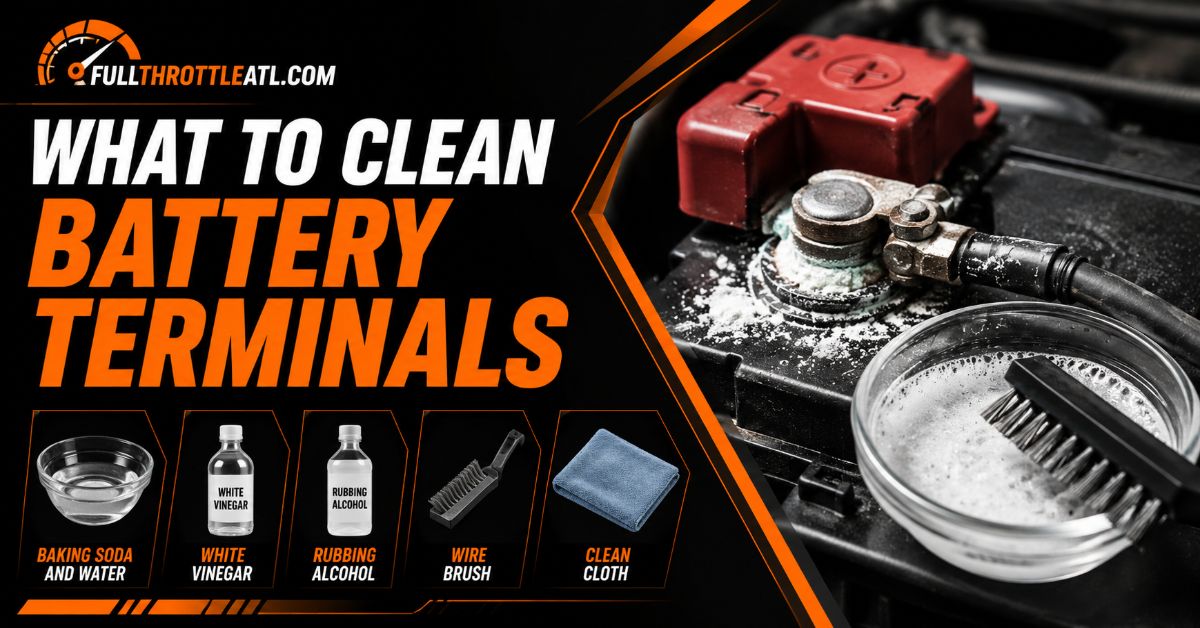
The best substance for cleaning battery terminals is a homemade neutralizing solution consisting of one tablespoon of baking soda mixed with one cup of warm water. This alkaline mixture chemically neutralizes acidic battery corrosion. Apply the solution, allow it to fizz for five minutes, scrub with a wire brush, and rinse with distilled water.
At a Glance
- Baking soda and warm water provides the safest and most effective terminal cleaning solution.
- Mechanics must always disconnect the negative black cable first to prevent dangerous electrical short circuits.
- The baking soda solution requires five to eight minutes of soaking time to fully neutralize battery acid.
- Rinsing terminals exclusively with distilled water prevents conductive mineral deposits from forming.
- Coating cleaned terminals with dielectric grease or petroleum jelly effectively blocks future corrosion.
- Vehicle owners must replace battery cables entirely if the wire insulation appears swollen, stiff, or bulging.
What Tools Do You Need For Battery Terminal Cleaning?
The essential tools for cleaning battery terminals include a stiff wire brush, a 10-millimeter wrench, safety glasses, and chemical-resistant gloves. You will also need your cleaning solution, a small container of distilled water, and a disposable microfiber cloth.
Safety equipment is non-negotiable when dealing with lead-acid batteries. The white powder on the terminals is highly acidic and will cause chemical burns upon contact with bare skin or eyes. A specialized battery terminal brush features a circular wire layout designed to perfectly score the lead post, but a standard stiff-bristled wire brush will work for removing surface-level buildup. The 10-millimeter wrench fits the vast majority of standard automotive battery terminal nuts.
What Is The Best Battery Terminal Cleaning Solution?
The best battery terminal cleaning solution is a simple homemade mixture of baking soda and warm water. Baking soda is chemically known as sodium bicarbonate. Sodium bicarbonate acts as a mild base that actively neutralizes the sulfuric acid leaking from the battery.
Commercial battery cleaning sprays are available at auto parts stores, but these aerosols offer no chemical advantage over basic sodium bicarbonate. In fact, commercial sprays often contain dyes and foaming agents that make it difficult to see if the underlying metal is truly clean. The baking soda mixture remains the gold standard among professional mechanics because the active chemical reaction produces visible bubbling. When the bubbling stops, the mechanic knows the acid is completely neutralized.
What Is The Exact Baking Soda Ratio?
The standard ratio for a battery cleaning solution is one tablespoon of baking soda mixed into one cup of warm water. Warm water dissolves the sodium bicarbonate powder much faster and more completely than cold water.
For batteries with severe or heavily caked-on corrosion, increase the ratio to two tablespoons of baking soda per cup of warm water. Stir the mixture vigorously until all the powder dissolves. If undisolved powder remains at the bottom of the cup, the solution is fully saturated and ready for use.
How Long Should You Soak Battery Terminals?
You should allow the cleaning solution to sit on the battery terminals for five to eight minutes before scrubbing. This specific resting period allows the chemical neutralization process to break down hardened acid deposits.
Many people make the mistake of scrubbing immediately after pouring the solution. Scrubbing too early forces the mechanic to rely on physical force rather than chemical breakdown. Waiting five to eight minutes allows the sodium bicarbonate to penetrate the microscopic pits in the lead post. Once the solution stops visibly fizzing and bubbling, the acid is neutralized and the remaining crust will wipe away with minimal physical effort.
What Kind Of Water Is Best For Rinsing Terminals?
Distilled water is the absolute best liquid for rinsing battery terminals after cleaning. Distilled water undergoes a boiling and condensation process that removes all minerals, salts, and impurities.
Tap water contains trace amounts of iron, calcium, magnesium, and other minerals. Pouring tap water over an electrical connection leaves these microscopic conductive minerals behind as the water evaporates. These mineral deposits can bridge the gap between the terminal and the chassis, creating a tiny parasitic electrical draw that drains the battery overnight. Flushing the area exclusively with distilled water ensures no conductive elements remain on the battery casing.
Why Must You Disconnect The Negative Battery Cable First?
You must disconnect the negative battery cable first to eliminate the risk of causing a catastrophic short circuit. The negative terminal connects directly to the metal chassis of the vehicle.
If a mechanic leaves the negative cable connected and accidentally touches a metal wrench between the positive terminal and the car body, the wrench completes the electrical circuit. This mistake instantly sends hundreds of cold cranking amps through the wrench. The massive current will cause intense sparking, melt the metal tool, and potentially cause the battery to explode. Disconnecting the negative cable first breaks the grounding circuit entirely. Once the ground is broken, accidentally touching the car body with a wrench on the positive side will not complete a circuit.
Can You Clean Battery Terminals Without Disconnecting Them?
You cannot properly clean battery terminals without disconnecting the cables. Pouring a cleaning solution over connected terminals only removes exterior, visible corrosion.
The most critical area to clean is the mating surface where the inside of the metal clamp touches the outside of the lead battery post. Acid wicks into this microscopic gap and hardens, creating severe electrical resistance. Pouring baking soda over a connected clamp will not penetrate this tight physical boundary. The vehicle may look clean, but the hidden corrosion will still prevent the alternator from charging the battery effectively. You must remove the clamps to expose and scrub the hidden contact surfaces.
How Do You Clean Lithium Battery Terminals Safely?
You clean lithium battery terminals by dipping a wire brush into the cleaning solution, scrubbing the metal briefly, and immediately wiping the area dry with a cloth. You must never soak or flood a lithium iron phosphate battery with liquid.
Standard lead-acid batteries are sealed plastic blocks that tolerate surface water well. Modern lithium batteries contain internal Battery Management System circuit boards located just below the plastic casing. Pooling water or excessive cleaning fluid can seep through microscopic seams and permanently destroy these sensitive internal electronics. Applying minimal moisture directly to the brush guarantees the terminal gets clean without risking water intrusion.
How Do You Clean Intelligent Battery Sensors?
You clean an Intelligent Battery Sensor by gently wiping it with a damp microfiber cloth. You must absolutely avoid submerging the sensor, pouring liquids over it, or scrubbing it with a stiff wire brush.
Many modern vehicles feature an Intelligent Battery Sensor mounted directly to the negative terminal clamp. This small square box measures voltage, current, and temperature to regulate the vehicle charging system. The sensor contains delicate internal electronics and fragile wiring harnesses. Aggressive scrubbing or liquid saturation will destroy the sensor, leading to dashboard warning lights and a repair bill that frequently exceeds two hundred dollars.
What Does The Color Of Battery Corrosion Mean?
The color of the powdery buildup on your battery terminals directly indicates which specific metals are reacting with the battery acid.
| Corrosion Color | Chemical Composition | Root Cause |
| White or Light Blue | Lead Sulfate | Acid is reacting with the lead battery post. This is the most common type of standard battery venting. |
| Green | Copper Sulfate | Acid has reached the copper wiring inside the battery cable. The cable insulation is likely compromised. |
| Yellow or Brown | Dried Sulfuric Acid | Pure battery acid has leaked and dried without heavily reacting to the surrounding metals. Indicates a cracked case. |
Identifying the color before cleaning helps you determine if you need to replace the battery cables or simply clean the lead posts.
Can You Clean Battery Terminals With Coca-Cola?
You can technically clean battery terminals with Coca-Cola, but you should never actually do it. Coca-Cola contains phosphoric acid and carbonic acid, which are acidic enough to eat away mild battery corrosion.
However, using a soft drink leaves behind a thick coating of sticky sugar syrup. This syrup traps road dust, dirt, and engine grease, creating an insulating layer of grime that ultimately makes the electrical connection worse. Furthermore, Coca-Cola only moves the existing acid around rather than neutralizing it. Baking soda is strictly superior because it chemically alters the acid into harmless salt and water, leaving zero sticky residue behind.
What Happens If Battery Cleaning Solution Gets On Car Paint?
If battery cleaning solution splashes onto car paint, it can permanently etch the clear coat and leave dull, cloudy spots on the finish.
While the baking soda mixture is a mild base, the solution becomes highly corrosive the moment it mixes with the acidic powder on the battery. This newly formed slurry contains dissolved lead and active sulfates. If this liquid splatters onto your fender during scrubbing, you must immediately rinse the paint with a large volume of clean water. Do not wipe the splatter with a dry cloth, as the dissolved lead particles will scratch the clear coat.
How Do You Remove Seized Battery Terminal Nuts?
You remove a seized battery terminal nut by soaking the hardware in a penetrating oil like WD-40 for fifteen minutes before using a dedicated battery terminal puller tool. You must never strike a stuck terminal with a hammer.
Corrosion essentially welds the metal nut to the bolt. Prying the clamp with a screwdriver or hitting it with a hammer applies lateral force to the lead battery post. Lead is extremely soft, and lateral force will snap the internal connections leading down into the battery plates, ruining the battery instantly. A terminal puller tool hooks under the clamp and pushes straight down on the post, lifting the seized clamp vertically without damaging the internal lead structures.
What If The Terminal Clamps Are Still Loose?
If a terminal clamp remains loose after you fully tighten the nut, you must install a lead battery shim over the post to restore a tight fit.
Severe corrosion literally eats away the metal of the battery post. After you clean away the white powder, you may discover the post is now significantly thinner than its original diameter. The clamp can no longer close tightly enough to grip the shrunken post. Lead battery shims are inexpensive, thimble-shaped caps that slide over the damaged post. They instantly add thickness to the metal, allowing the clamp to grip tightly and restore a flawless electrical connection.
When Should You Replace The Battery Cable?
You must replace the entire battery cable when the rubber wire insulation near the terminal looks swollen, feels stiff, or exhibits a bulging appearance.
This physical deformity indicates that battery acid has wicked up inside the rubber insulation and is actively dissolving the copper wire strands from the inside out. No amount of exterior cleaning will fix internal cable rot. The wire will experience high electrical resistance, causing starting failures and excessive alternator wear. Splicing a new clamp onto a rotted cable is a temporary bandage; the only permanent fix is replacing the entire cable assembly from the battery down to the starter or ground point.
Why Do Battery Terminals Corrode Again Quickly?
If heavy white corrosion returns to a cleaned battery terminal within a few weeks, the plastic seal surrounding the base of the battery post has permanently failed.
Car batteries naturally produce hydrogen gas during the charging cycle. A healthy battery vents this gas away from the terminals. When the seal around the lead post cracks due to age, vibration, or over-tightening, the corrosive gas leaks directly upward into the metal clamp. The baking soda solution cleans the symptom perfectly, but the cracked seal is the incurable disease. Rapid recurring corrosion means the battery casing is compromised and you must replace the entire battery.
Should You Use Terminal Protector Spray Or Dielectric Grease?
You should use a thick layer of dielectric grease or standard petroleum jelly instead of aerosol terminal protector sprays. Grease provides a superior, longer-lasting physical barrier against corrosive gasses.
Aerosol protector sprays are convenient to apply, but the thin chemical layer tends to dry out, crack, and flake off inside the hot engine bay. Once the spray layer cracks, acid vapors easily penetrate the gap. Dielectric grease and petroleum jelly never dry out. Slathering a thick coating of grease completely over the assembled terminal creates a self-healing, air-tight barrier that physically blocks moisture and acid gas from ever touching the metal components.
How Often Should You Clean Battery Terminals?
You should inspect and clean your battery terminals every six months or during every routine oil change, whichever comes first.
Preventative maintenance requires minimal effort and stops massive electrical failures. A light dusting of corrosion is easily wiped away in two minutes. If you wait for the vehicle to exhibit hard-starting symptoms, the corrosion has already begun pitting the lead posts and increasing resistance on the alternator. Living in environments with high humidity or extreme temperature fluctuations accelerates battery venting, making a strict six-month cleaning schedule mandatory for reliable vehicle operation.
The Bottom Line
The definitive solution for dirty battery terminals is a simple mixture of one tablespoon of baking soda and one cup of warm water. This solution actively neutralizes destructive acid rather than just washing it away. Always disconnect the negative cable first to ensure mechanical safety, and never skip the five-minute soaking period. If you clean the terminals perfectly but experience returning corrosion within a month, the battery casing has failed and replacement is your only viable option. Proper cleaning followed by an application of dielectric grease will significantly extend the life of your entire electrical system.