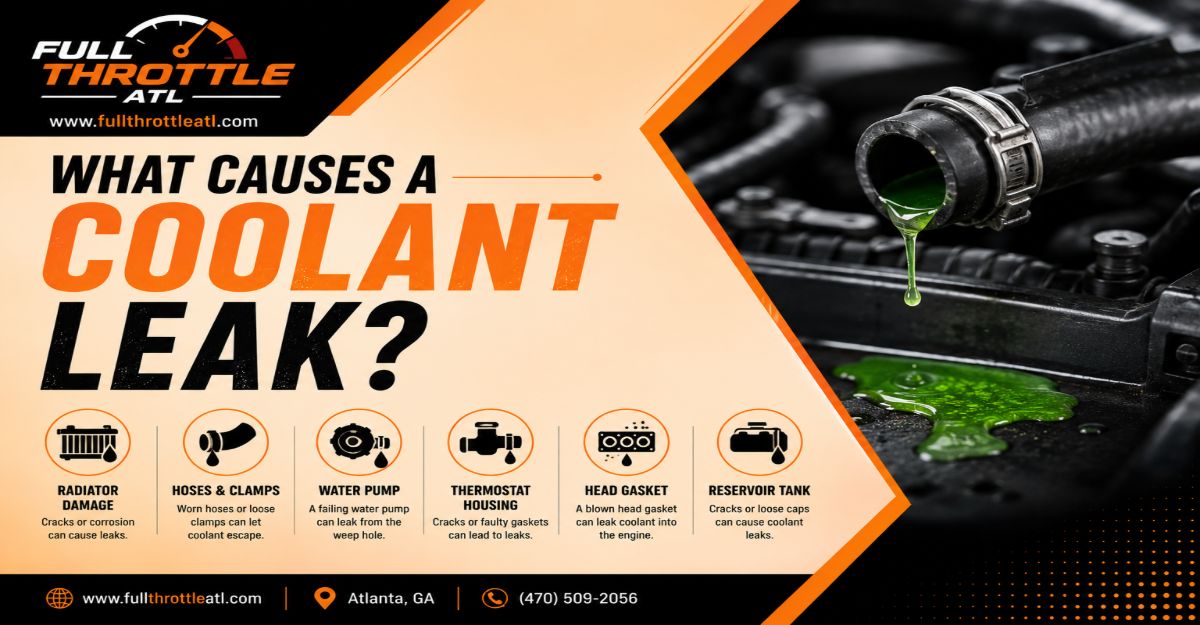
A coolant leak is primarily caused by corrosion, thermal degradation, mechanical vibration, or pressure spikes within the cooling system. Over time, these physical forces degrade rubber seals, flexible hoses, and metallic components, allowing pressurized antifreeze to escape and leading to severe engine overheating.
At a Glance
- Pressure Limits: Radiator caps rated for 14 to 16 PSI fail when pressures spike above 20 to 30 PSI, rupturing vulnerable hoses and plastic tanks.
- Thermal Thresholds: Coolant temperatures regularly exceeding 115°C (240°F) cause plastic end tanks to become brittle and rubber hoses to suffer electrochemical degradation.
- Chemical Corrosivity: When coolant additives deplete and pH drops below 7.0, acidic fluid aggressively eats away at aluminum radiator cores and water pump impellers.
- Stray Voltage: Electrical currents exceeding 0.10 volts inside the cooling system trigger active electrolysis, rapidly destroying internal metallic components.
What Pressure Spikes Cause Cooling System Failures?
Pressure spikes occur when internal cooling system pressures exceed standard operating thresholds, typically jumping from a normal 14 to 16 PSI up to dangerous levels of 20 to 30 PSI. This over-pressurization is usually triggered by a blown head gasket forcing combustion gases into the cooling jacket or a stuck thermostat blocking fluid flow. The resulting surge overwhelms the weakest structural link, causing rubber hoses to balloon and split or crimped plastic radiator tanks to fracture along their seams.
How Does Thermal Breakdown Cause Coolant Leaks?
Thermal breakdown occurs when an engine operates above its normal 90°C to 105°C (195°F to 221°F) range, with coolant temperatures regularly surpassing 115°C (240°F). Extreme heat alters the chemical structure of rubber and plastic components. Plastic radiator end tanks lose their plasticizers, becoming brittle and prone to shattering, while rubber coolant hoses suffer from electrochemical degradation that creates microscopic internal fissures.
How Does Coolant Chemical Imbalance Damage Components?
Coolant chemical imbalance happens when corrosion inhibitors deplete, causing the fluid pH to drop below 7.0 and turn acidic, or rise above 8.5. Acidic coolant aggressively strips protective oxide layers from aluminum engine components. This chemical attack corrodes aluminum radiator cores, thermostat housings, and water pump impellers at a rate of several mils per year, eventually eating clean through thin metallic barriers.
What Is Coolant Electrolysis and How Does It Ruin a Car?
Coolant electrolysis is an electrochemical reaction caused by degraded engine ground wires that force stray electrical currents to travel through the coolant fluid. A digital multimeter test revealing a reading above 0.10 volts inside the coolant reservoir confirms active electrolysis. This electrical stray current rapidly pits and erodes aluminum components, capable of burning a hole straight through an aluminum heater core in less than 90 days.
Why Do Water Pump Bearings Cause Coolant Weeping?
Water pump bearing wear causes internal mechanical seal failure whenever the pump shaft develops mechanical play exceeding 0.05 mm of runout. As the bearing wobbles, it compromises the precision ceramic and carbon seal faces. This misalignment allows pressurized coolant to escape past the seal and weep visibly from the water pump’s designated weep hole.
How Do Radiator Plastic Tank Seams Fail?
Radiator plastic tank seam leaks occur because modern automotive radiators join plastic end tanks to an aluminum core using a mechanical metal crimp and an internal rubber gasket. Decades of cyclic thermal expansion-shifting repeatedly from ambient temperature up to 100°C-gradually fatigues and relaxes the aluminum crimp tabs, allowing pressurized antifreeze to seep past the compressed rubber gasket.
What Is Hose Electrochemical Degradation (ECD)?
Hose electrochemical degradation is an invisible failure mode where electrical currents passing through engine coolant interact with the inner rubber lining of radiator hoses. This reaction forms micro-fissures from the inside out, structurally compromising the hose wall while leaving the outer rubber looking pristine. Eventually, the weakened hose bursts under normal driving pressure without any preceding external warning signs.
What Is a “Ghost” Leak and How Do You Find It?
A “ghost” leak is an elusive coolant loss caused by a hairline crack in a plastic expansion tank or radiator side-tank that only opens up under full operating temperature and pressure. When hot coolant escapes through the microscopic fissure, it instantly atomizes and evaporates upon contacting the hot engine block. This leaves behind no puddles on the ground, only a faint sweet ethylene glycol smell and a gradually emptying reservoir.
What Is Cavitation Erosion in Water Pumps?
Cavitation erosion is a destructive physical process common in high-mileage or heavy-duty water pumps where rapid impeller rotation creates microscopic vapor bubbles in the coolant. When these low-pressure bubbles surge into high-pressure zones and instantly collapse, they generate localized shockwaves reaching up to 10,000 PSI. These repetitive micro-explosions physically pit and punch holes straight through iron cylinder liners and aluminum pump housings.
How Does a Transmission Oil Cooler Breach Happen?
A transmission oil cooler breach occurs when the internal metallic barrier separating the transmission fluid chamber and the coolant chamber inside a radiator corrodes through. Because transmission fluid operates under much higher pressure (often 100 to 300 PSI) than the cooling system, transmission fluid forces its way into the coolant lines, or vice versa, creating a thick, strawberry-milkshake-textured sludge inside the overflow reservoir.
Why Do Cooling System Pressure Tests Fail?
Cooling system pressure tests frequently fail to find intermittent leaks because a mechanic typically pumps the cold system to 15 PSI while the engine is stationary. A hidden fracture or loose clamp may remain completely sealed until the engine block vibrates at 2,500 RPM or reaches 90°C, where thermal expansion physically pulls the fractured materials apart and opens the leak path.
Why Do Intermittent Cold Leaks Happen in Winter?
Intermittent cold leaks occur when sub-zero ambient winter temperatures cause specialized silicone hoses and rubber O-rings to contract significantly and lose their elasticity. The cooling system leaks heavily overnight as the materials shrink away from their fittings, but the leak spontaneously seals itself as soon as the engine starts, warms up, and thermal expansion forces the rubber to re-expand and seal the joint.
How Can a Head Gasket Leak Without White Smoke?
A head gasket can leak without producing white exhaust smoke if the gasket failure occurs across an oil jacket or breaches externally to the atmosphere rather than crossing directly into a combustion cylinder. Coolant bypasses the cylinders entirely, channeling directly into the engine oil crankcase-turning the oil dipstick into a milky, foamy brown mixture-or dripping straight onto the ground.
Can You Drive With a Small Coolant Leak?
You should not drive with a coolant leak, even if it appears minor. Cooling systems rely on pressurized caps to raise the boiling point of antifreeze. A leak drops system pressure to 0 PSI, causing the coolant to boil prematurely at much lower temperatures, which rapidly triggers catastrophic engine overheating, warped cylinder heads, and seized pistons within minutes.
Why Is My Car Losing Coolant With No Visible Leaks?
A car losing coolant with no visible exterior puddles is consuming the fluid internally due to a failed head gasket, a cracked cylinder head, or a warped intake manifold gasket. The engine draws the coolant directly into the combustion chambers where it burns off as invisible exhaust vapor, or it contaminates the oil supply. Checking the oil dipstick for a milky, chocolate-milk consistency confirms internal mixing.
Is It Safe to Top Off a Cooling System With Pure Water?
Topping off a cooling system with pure water is safe only as a temporary emergency measure. Water lacks the necessary boiling-point elevation, freeze protection, and anti-corrosive properties of formulated antifreeze. Furthermore, municipal tap water introduces minerals like calcium that scale and clog internal radiator cores, meaning drivers must use distilled water and flush the system promptly.
Why Does a Car Leak Coolant Only After Being Turned Off?
A car leaks coolant immediately after shutdown due to a phenomenon known as thermal soak. When a hot engine is turned off, the water pump stops circulating coolant, but massive residual heat trapped inside the engine block transfers into the stationary fluid. This localized heat spike causes a temporary surge in temperature and pressure, forcing coolant past weak seals that successfully held back fluid while the engine was running.
The Bottom Line
Coolant leaks are driven by mechanical stress factors including high pressure, thermal breakdown, chemical corrosion, and electrical electrolysis. Diagnosing these failures requires looking beyond standard pressure tests to account for thermal expansion, internal combustion breaches, and evaporative ghost leaks. Maintaining proper coolant chemistry, replacing aging hoses proactively, and addressing minor temperature anomalies immediately prevents catastrophic engine failure.