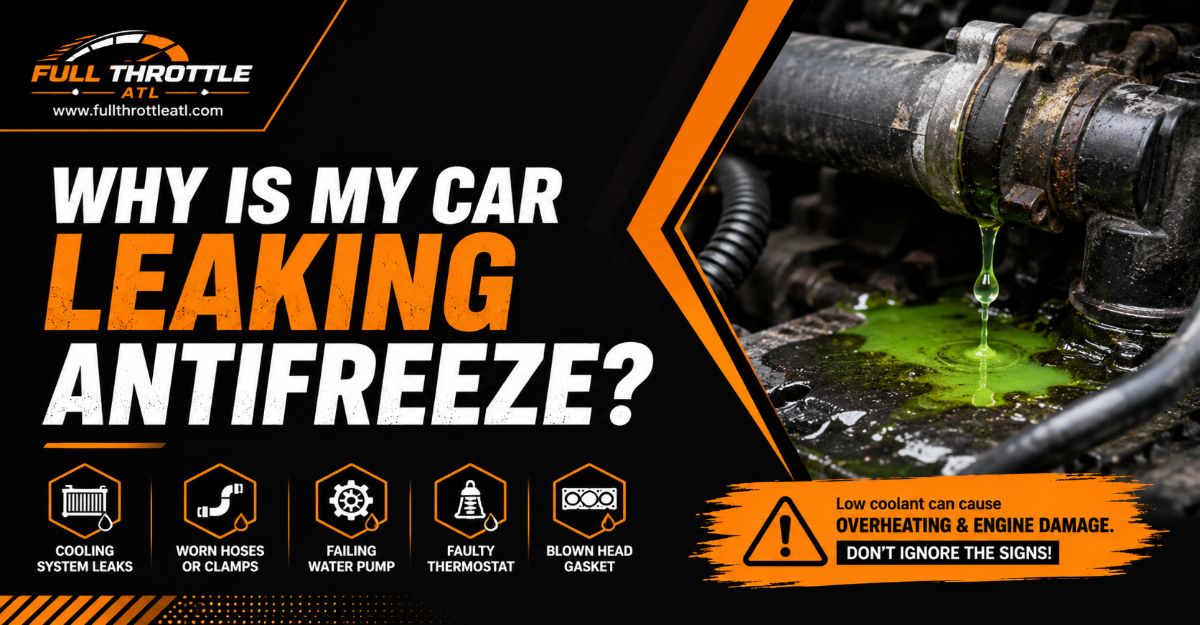
A car leaks antifreeze primarily due to a compromised component within the pressurized cooling loop, such as a degraded radiator hose, a failed water pump seal, a cracked plastic radiator tank, or a worn-out radiator cap. Because the system operates under a continuous pressure of 13 to 16 PSI, even a minor crack or loose clamp will force fluid out once the engine hits its standard operating temperature of 195°F to 220°F.
At a Glance: Essential Facts About Antifreeze Leaks
- Pressure Threshold: Cooling loops run at 13–16 PSI; a weakened radiator cap releasing at 10 PSI will cause premature boiling and coolant overflow.
- The “Weep Hole” Warning: Water pumps feature a designated drain hole that drips coolant when internal shaft seals fail, signaling upcoming pump failure.
- Distinctive Odor: Ethylene glycol produces a sweet, maple-syrup-like smell when vaporizing on hot exhaust components.
- Internal vs. External: External leaks pool on the ground or evaporate; internal leaks mix with engine oil or burn through the combustion chamber.
- Repair Variance: Simple fixes like a radiator cap cost under $25, whereas complex heater core replacements can exceed $1,500 due to dashboard labor.
What Are the Most Common Parts That Fail and Cause Coolant Leaks?
Coolant leaks stem from specific physical breakdown points across the cooling system’s plumbing and hardware. The most frequent mechanical failures include cracked rubber radiator hoses, deteriorated hose clamps, failing water pump shaft seals, and split plastic side tanks on aluminum radiators. Over time, constant thermal cycling-the rapid expansion and contraction from heat cycles-breaks down the molecular bonds of rubber and plastic components.
For instance, standard rubber hoses turn brittle after 60,000 to 90,000 miles, creating micro-fissures where they slip over metal spouts. Similarly, aluminum core radiators feature plastic end-tanks crimped down with rubber gaskets; these specific junctions frequently warp and leak under high operating pressures.
Why Is My Car Leaking Antifreeze When Parked?
A car leaks antifreeze while parked due to static cooling system pressure combined with thermal contraction during a “cold soak.” When an engine runs, coolant expands inside closed loops under high heat. Once the engine is turned off, the metal and rubber components begin to cool down and contract simultaneously.
This thermal contraction opens up minute gaps around hose clamps, degraded gaskets, or hairline radiator cracks that remained sealed while the engine was hot and expanded. Furthermore, residual system pressure forces fluid through these newly opened cold gaps, resulting in fresh puddles on the ground beneath the vehicle hours after parking.
Why Is My Car Leaking Antifreeze But Not Overheating?
A vehicle leaks antifreeze without overheating when the volume loss has not yet dropped the overall coolant level below the critical threshold required to maintain thermal transfer. Modern cooling systems maintain a reserve volume inside the expansion overflow tank.
If a leak is small-such as a weeping water pump seal or a minor pinhole in an overflow hose-the radiator remains full enough to circulate fluid effectively across the engine block. However, ignoring a non-overheating leak is risky; once the total fluid volume drops past a tipping point, the engine will rapidly transition from normal temperatures to catastrophic overheating.
How Can I Find an Invisible or Hidden Coolant Leak?
Finding an invisible coolant leak requires specialized diagnostic tools because visual inspections fail when fluid evaporates instantly on hot engine parts or leaks internally. Mechanics and DIYers rely on three precise methods:
- Coolant Pressure Tester: Attach a manual hand-pump tool equipped with a pressure gauge directly to the radiator neck on a cold engine. Pump the system up to the cap’s rated pressure (e.g., 15 PSI) to force fluid out of hidden cracks without the danger of burns.
- UV Dye Kit: Pour fluorescent ultraviolet dye into the coolant reservoir and drive normally for 24 hours. Shine a UV blacklight under the hood in the dark; the escaping coolant will glow bright neon yellow or green at the exact breach point.
- Combustion Leak Block Tester: If coolant vanishes with zero external puddles, clamp a block-tester tool filled with blue chemical liquid over the radiator opening. If engine exhaust gases are leaking past a blown head gasket into the cooling system, the blue fluid will turn yellow.
Why Is There Coolant Leaking Inside My Car on the Floor Mats?
Coolant leaks inside the passenger cabin directly onto the floor mats due to a ruptured or corroded heater core. The heater core functions like a miniature radiator housed inside the dashboard, utilizing hot engine coolant to blow warm air into the vehicle’s interior cabin via the blower motor.
When the internal matrix of the heater core develops a pinhole leak, pressurized antifreeze spills out of the unit, pools inside the plastic HVAC housing, and overflows onto the passenger-side floor board. Telltale signs include a greasy film coating the inside of the windshield, sweet-smelling cabin vapor, and a constantly damp, sticky carpet.
What Causes a Car to Lose Antifreeze Without Any Visible Puddles?
A car loses antifreeze without visible ground puddles when the fluid is consumed internally by the engine via a compromised head gasket or a cracked intake manifold gasket. Under these failure conditions, the engine vacuum or high combustion pressure draws coolant directly into the cylinders, where it vaporizes and exits out the tailpipe as white exhaust smoke.
Alternatively, failing intake manifold gaskets-a notorious issue on older GM 3.1L, 3.4L, and 3.8L V6 engines-can leak coolant sideways directly into the crankcase, causing the fluid to blend into the engine oil supply instead of dripping onto the pavement.
Can I Safely Drive My Car With a Coolant Leak?
Driving a car with an active coolant leak is highly risky and strongly discouraged. A leaking system cannot maintain proper internal pressure, which drastically lowers the boiling point of the antifreeze and triggers localized steam pockets called “hot spots” inside the cylinder head. These hot spots warp aluminum engine components and can cause a blown head gasket within minutes.
If you must drive a short distance to a repair shop, switch the cabin heater to maximum heat and high blower speed to draw heat away from the engine block, and pull over immediately if the temperature gauge starts climbing.
Can I Use Water Instead of Antifreeze in an Emergency?
Water can be used in the cooling system strictly as a temporary roadside emergency measure. Pure water has a lower boiling point (212°F) than a standard 50/50 mix of ethylene glycol and water (~223°F), and it lacks the anti-corrosive chemical additives required to protect internal engine metals.
If you must add water to reach safety, you must use distilled water rather than tap water; minerals found in tap water cause rapid internal scale buildup, rust, and premature radiator clogging. Once safe, the system must be completely flushed and refilled with the correct coolant concentration.
What Does a Coolant Leak Smell Like?
A coolant leak produces a distinct, sweet smell resembling maple syrup, caramel, or artificial fruit candy. This odor comes from ethylene glycol or propylene glycol, the primary chemical alcohols formulated into modern automotive antifreezes.
If you catch this sweet scent inside the cabin or around the engine bay after driving-even if you see no visible puddles-it indicates that hot liquid is actively spraying or dripping onto scorching exhaust manifolds or engine blocks, where it bakes and vaporizes into the surrounding air instantly.
Why Is My Engine Oil Looking Milky or Like a Chocolate Milkshake?
Engine oil appears milky or resembles a chocolate milkshake because internal engine failure has allowed coolant to cross-contaminate the oil supply. This severe condition occurs when a head gasket blows or an intake manifold gasket fails internally, opening a direct passage between the coolant jackets and the oil lubrication galleries.
When oil and antifreeze churn together under engine operation, they emulsify into a thick, light-brown sludge. Do not run the engine if you spot this; the compromised fluid loses its lubrication properties, which will spin engine bearings and destroy the motor in short order.
How Much Does It Cost to Fix an Antifreeze Leak?
Repair costs for an antifreeze leak vary significantly depending on the exact failed component, labor requirements, and vehicle make. Minor hardware replacements are inexpensive, while deep internal components require extensive labor hours.
| Component | Estimated Cost Range | Labor and Complexity Notes |
|---|---|---|
| Radiator Cap | $10 – $25 | Extremely easy DIY replacement in under two minutes. |
| Thermostat & Housing | $180 – $480 | Varies based on component accessibility under the hood. |
| Intake Manifold Gasket | $300 – $600 | Moderate to high labor; common historical issue on GM V6 engines. |
| Radiator Assembly | $850 – $1,400 | Dealership pricing; independent shops typically charge $200–$400 for minor core fixes. |
| Heater Core | $800 – $1,500+ | Extremely high labor cost because the entire dashboard assembly must be removed. |
The Bottom Line
A car leaking antifreeze requires immediate diagnosis to prevent permanent thermal damage to the engine block and cylinder heads. Whether the issue stems from a simple $15 pressure cap, a brittle radiator hose, or a failing water pump weep hole, identifying the leak early saves hundreds of dollars in major repairs. Always prioritize safety: never open a hot radiator system, watch for the classic sweet smell or puddles, and utilize pressure testing tools to pinpoint hidden structural failures.