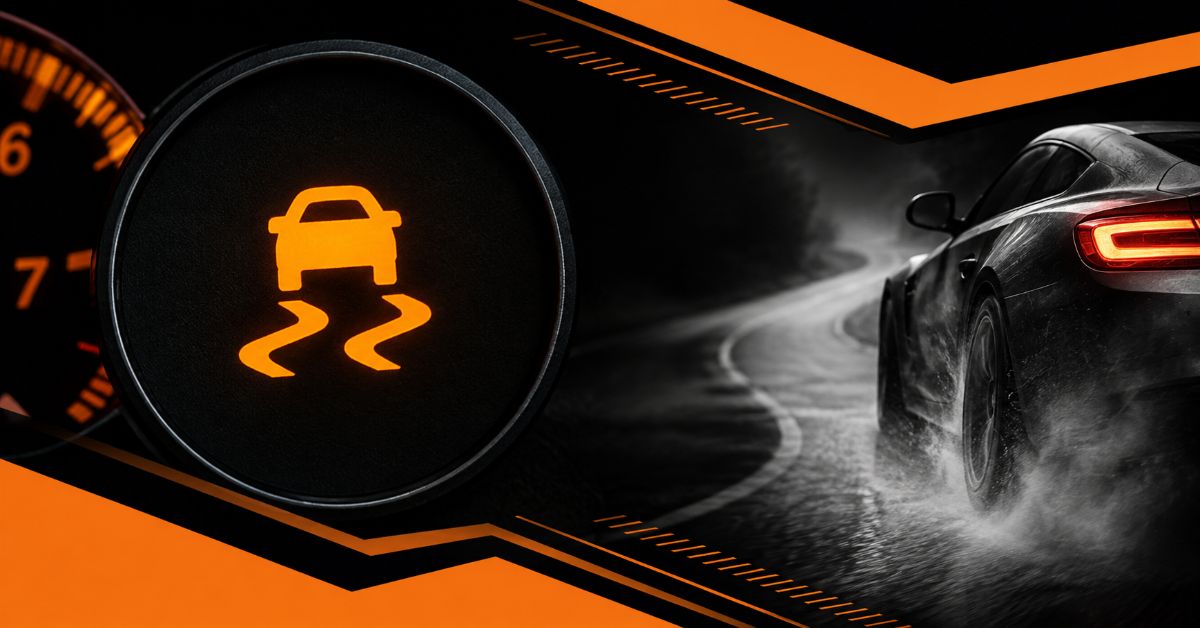
The car swerve light—a dashboard icon depicting a vehicle with two wavy S-shaped skid marks underneath—indicates that your vehicle’s Traction Control System (TCS) or Electronic Stability Control (ESC) is active or disabled. A flashing light signals active skid correction, while a solid light indicates the system is deactivated, disabled, or malfunctioning.
At a Glance
- Flashing Swerve Light: The system is currently intervening to stop tire slippage by reducing engine power or applying selective braking.
- Solid Swerve Light: The system is switched off or shut down due to a hardware failure, sensor fault, or safety lock out.
- Core Mechanics: TCS triggers when individual wheel slip exceeds 10%, or when yaw rotation exceeds steering input by 8° per second.
- Driving Safety: Standard hydraulic braking and steering remain fully functional when the light is solid, but anti-skid protection is disabled.
- Electrical Sensitivity: Sensor signal drops below 0.15V or system voltage dips below 8.0V instantly force a solid system shutdown.
What Is the Difference Between a Flashing and Solid Swerve Light?
A flashing car swerve light means the Traction Control System is actively operating to regain traction, whereas a solid light means the system has been turned off or disabled due to a fault.
When the swerve light flashes, wheel speed sensors have detected that one or more tires are spinning faster than the car’s actual road speed. The vehicle control module immediately intervenes by modulating fuel delivery, retarding ignition timing, or applying hydraulic pressure to specific wheel brakes until traction stabilizes. This behavior is normal on icy, wet, or unpaved surfaces.
When the swerve light stays solid, the traction and stability systems are entirely inactive. This occurs either because the driver manually pressed the “TCS OFF” button or because the onboard diagnostic computer detected an electrical fault, failed sensor, or mechanical error in the system. While standard foundation brakes remain fully operational, the vehicle will not automatically correct a slide or wheelspin while the light is solid.
How Do Traction and Stability Control Systems Detect a Skid?
Traction Control Systems monitor vehicle dynamics using precise mathematical thresholds from wheel speed sensors, yaw rate sensors, and voltage regulators to detect loss of traction in real time.
       +-------------------------------------------------------+
       |   Vehicle Dynamics Monitoring Computer (ECU / ABS)    |
       +-------------------------------------------------------+
            /                      |                      \
           /                       |                       \
  [Wheel Speed Sensor]    [Yaw & Steering Sensor]   [Voltage Monitoring]
          |                        |                        |
  Slip Exceeds 10%        Yaw Variance > 8°/sec     Voltage Drops < 8.0V
          |                        |                        |
          v                        v                        v
  Intervene: Flashing     Intervene: Flashing       Disable: Solid Light
   (Engine Power Cut /     (Selective Wheel Brake    (System Safety
   Brake Modulation)        Force Application)        Shutdown & DTC)
The system evaluates four specific mathematical operational baselines:
- The 10% Wheel Slip Rule: The computer calculates vehicle ground speed against individual tire rotation speed. If a driven wheel spins more than 10% faster than non-driven wheels during acceleration, the computer registers wheelspin and triggers the swerve light.
- Yaw Rate Threshold (< 8°/sec): The vehicle’s gyroscopic yaw sensor measures rotational velocity around its vertical axis. If the car rotates at a rate that deviates from the steering wheel angle by more than 8 degrees per second, Electronic Stability Control activates selective wheel braking to counter oversteer or understeer.
- Sensor Voltage Window (0.15V – 4.85V): Individual speed and position sensors operate on a standard 5-volt reference circuit. If a sensor’s signal voltage drops below 0.15 Volts or spikes above 4.85 Volts, the control unit identifies an open circuit or short circuit and disables the system.
- Battery Voltage Floor (8.0V): The stability control system requires stable line voltage to actuate hydraulic valves. If battery voltage drops below 8.0 Volts—even for milliseconds during starter engine cranking—the module aborts its self-check routine and turns the swerve light on solid.
What Is the Difference Between the Swerve Light, ABS, and ESP Lights?
The swerve light, ABS light, and ESP/ESC lights represent overlapping components of the vehicle’s active safety suite, but each indicates a distinct system function or diagnostic scope.
| Dashboard Warning Light | Primary System | Function When Triggered | Mechanical Effect |
| Swerve Light (TCS) | Traction Control System | Prevents drive wheels from spinning under acceleration. | Cuts engine throttle; pulses drive-wheel brakes. |
| ESP / ESC Light | Electronic Stability Control | Prevents vehicle skidding, spin-outs, and rollover risks. | Applies individual brakes to outer/inner wheels during turns. |
| ABS Light | Anti-Lock Braking System | Prevents wheels from locking up under heavy braking. | Pulses brake pressure across all four wheels during hard stops. |
While these three systems share the wheel speed sensors and hydraulic control unit, a standalone swerve light targets wheel spin under throttle, whereas an ABS light specifically addresses wheel lockup under braking. When all three lights illuminate simultaneously, the central electronic control module has suffered a complete system communication breakdown or primary power loss.
Is It Safe to Drive with the Solid Swerve Light On?
Yes, it is generally safe to drive short distances with a solid swerve light, provided you drive cautiously and understand that automatic skid recovery is completely unavailable.
A solid swerve light does not disable basic hydraulic braking, power steering, or engine operation. Your vehicle will stop and steer normally during everyday driving maneuvers on dry, high-traction pavement. However, without active Traction Control and Electronic Stability Control, the vehicle will not automatically counteract tail-end slides, wheelspin on wet roads, or hydroplaning.
Drivers should avoid rapid acceleration, aggressive cornering, and tailgating when the solid light is on. On snow, ice, gravel, or heavily saturated asphalt, the loss of automated stability support significantly increases the risk of losing control. If the solid swerve light is accompanied by a red hydraulic brake warning light, stop driving immediately, as primary braking capabilities may be compromised.
How Long Can You Drive with the Traction Control Light On?
You can drive indefinitely on a solid traction control light without causing immediate mechanical damage to the engine or transmission, provided the underlying fault is isolated to a safety sensor.
Unlike an engine oil pressure light or low coolant warning—which demand immediate shutdown to prevent catastrophic mechanical destruction—a solid traction control light simply indicates that an electronic driver-assist system has locked itself out. The mechanical drivetrain continues to function normally under manual driver control.
However, extended driving with a solid light leaves the vehicle vulnerable in emergency collision-avoidance maneuvers. Additionally, if the root cause is a bad wheel bearing that degrades over time, driving for more than 100 to 500 miles can cause severe hub assembly failure or wheel detachment. Get the underlying diagnostic trouble codes read within one week of illumination.
Why Does the Swerve Light Flash When Accelerating on Dry Roads?
A swerve light that flashes during steady acceleration on dry, clean pavement indicates either a failing wheel speed sensor, severe tire wear, or erratic sensor ring signals sending bad data to the computer.
When driving on dry roads, all four tires rotate at identical ground speeds. If a wheel speed sensor sends corrupted or missing voltage pulses—often caused by metal debris, cracked tone rings, or internal wiring degradation—the computer interprets this “garbage data” as sudden wheelspin.
Thinking the vehicle is sliding, the control computer prematurely cuts engine power and pulses the brakes, causing stuttering acceleration on dry pavement. This phantom intervention can be dangerous when entering highway traffic or executing passes. Inspect wheel speed sensor harnesses and tone rings for corrosion or road grime.
Why Does the Swerve Light Stay On with the Check Engine Light?
The swerve light turns on alongside the Check Engine Light because modern engine computers automatically disable stability systems whenever a engine or transmission fault occurs that prevents precise torque control.
       +-------------------------------------------------------+
       |   Engine / Powertrain Control Module (ECM / PCM)       |
       +-------------------------------------------------------+
                                   |
                  Detects Misfire or Engine Fault
                                   |
                                   v
             +-------------------------------------------+
             | Disables Torque-Reduction Management      |
             +-------------------------------------------+
                                   |
                                   v
             +-------------------------------------------+
             | Triggers Powertrain Limp Mode & Codes     |
             +-------------------------------------------+
                     /                           \
                    v                             v
  Illuminates Check Engine Light        Forces Solid Swerve Light (TCS OFF)
Traction control relies on the Powertrain Control Module (PCM) to rapidly decrease engine torque by retarding spark timing or cutting fuel injector pulses within milliseconds. If the engine experiences an active misfire, mass air flow sensor fault, or transmission shift delay, the PCM cannot guarantee accurate torque reduction.
To prevent engine damage or unpredictable throttle behavior, the vehicle computer intentionally disables the Traction Control System and illuminates both dashboard symbols. Fixing the primary engine fault (such as replacing an ignition coil or spark plug) typically clears both warning lights simultaneously.
Can Mismatched Tires or Bad Alignment Trigger the Swerve Light?
Yes, both mismatched tire dimensions and uncalibrated wheel alignments will cause the traction control computer to detect false speed differentials and illuminate the swerve light.
- Mismatched Tires: Replacing only one or two worn tires creates small differences in overall tire circumference. A tread depth difference of 3/32 of an inch or a pressure variance of 10 PSI changes rolling radius enough to create a permanent 2 to 3 mph speed variance between wheels. The computer interprets this constant rotational difference as continuous wheel slipping, lighting the dashboard warning.
- Bad Alignment & SAS Calibration: Following a physical wheel alignment, the car’s wheels may track straight, but the Steering Angle Sensor (SAS) may still report an off-center angle to the ECU. If the SAS reports a 5-degree left turn while all four wheel speed sensors show straight-line driving, the stability system flagged a trajectory mismatch and shuts down with a solid light.
Why Does the Swerve Light Turn On After a Battery Jumpstart?
The swerve light illuminates after a jumpstart because the vehicle’s electronic control modules experience voltage starvation or lose volatile calibration memory during a dead-battery event.
Traction control modules run internal self-diagnostic checks upon initial ignition power-up. If the vehicle battery voltage drops below the 8.0-volt operational floor during cranking, the module aborts initialization and logs a low-voltage fault code (e.g., Code C0800).
Furthermore, jumpstarting can disrupt the Steering Angle Sensor zero-point calibration on many vehicle platforms (especially modern European and Japanese vehicles). Resolving this usually requires driving the car in a straight line at speeds above 15 mph for a quarter-mile, or turning the steering wheel fully from lock to lock while idling to re-initialize the center point.
What Should You Do If the Swerve Light Flashes Unexpectedly on the Highway?
If the swerve light flashes unexpectedly while driving at high speeds on a dry highway, ease off the accelerator immediately, keep the steering wheel firm and straight, and do not hit the brakes abruptly.
A flashing swerve light indicates active computer intervention. If the system is acting on false sensor data at highway speeds, it may unexpectantly apply brake force to an individual wheel or cut engine power, pulling the vehicle toward one side.
       Unexpected Highway Flash Event
                     |
                     v
   +------------------------------------+
   | 1. Do NOT slam on the brakes       |
   | 2. Ease off throttle smoothly      |
   | 3. Maintain firm steering control  |
   | 4. Safely pull over to shoulder    |
   | 5. Manually press TCS OFF button   |
   +------------------------------------+
- Maintain Control: Hold the steering wheel firmly with both hands to counter any sudden single-wheel brake application.
- Reduce Throttle: Smoothly release the gas pedal. Do not slam on the brake pedal, as combined manual braking and computer-controlled pulse braking can upset chassis balance.
- Disable the System: Once safe, locate and press the manual “TCS OFF” button to disable active interventions until the vehicle can be inspected.
- Pull Over: Safely move to the shoulder, turn off the ignition for 60 seconds, and restart the engine to reset the control module.
When Should You Intentionally Turn Off Traction Control?
You should intentionally turn off traction control when your vehicle is stuck in deep snow, mud, or loose sand, or when driving with snow chains attached.
When a vehicle is trapped in snow or soft mud, a small amount of wheelspin is necessary to clear tire tread grooves and dig down to solid ground. If Traction Control remains active, it detects this initial wheelspin, cuts engine power completely, and clamps down on the brakes, stranding the car.
                       Is Vehicle Stuck in Snow / Mud / Sand?
                                   /           \
                                 YES            NO
                                 /                \
          +-----------------------------+     +-----------------------------+
          | Turn TCS OFF Manually       |     | Keep TCS ON                 |
          | Allows necessary wheelspin  |     | Provides automated anti-    |
          | to dig through soft ground  |     | slip safety protection      |
          +-----------------------------+     +-----------------------------+
By pressing the manual TCS button to disable the system, you allow the engine to deliver full power to the drive wheels, allowing momentum to rock the vehicle out of the rut. Once the vehicle returns to paved, clear roads, reactivate Traction Control immediately.
How Do You Reset the Car Swerve Light Without a Scanner?
You can reset a temporary swerve light by performing a drive-cycle initialization or executing a hard power reset of the vehicle’s electrical system.
1. Perform a Steering Lock-to-Lock Reset
   Turn ignition ON -> Rotate wheel fully LEFT -> Rotate wheel fully RIGHT -> Recenter -> Turn OFF.

2. Perform a Steering Calibration Drive Cycle
   Drive straight on flat ground at 15-25 mph for 0.5 miles without turning.

3. Perform a Hard Power Reset
   Disconnect Negative Battery Terminal (-) -> Wait 15 Minutes -> Reconnect -> Start Engine.
If the underlying mechanical fault remains unresolved (such as a severed sensor wire or bad wheel bearing), the vehicle control module will re-detect the issue during its automatic self-check within 50 to 100 feet of driving, and the swerve light will turn back on.
How Much Does It Cost to Fix the Traction Control System?
Fixing a car swerve light costs between $100 and $1,200, depending on whether the issue is a simple sensor calibration or a failed hydraulic control module.
| Common Repair Component | Estimated Cost (Parts & Labor) | Primary Failure Symptoms |
| Wheel Speed Sensor Replacement | $200 – $450 | Flashing light on dry roads; fault code C0035-C0050. |
| Steering Angle Sensor Calibration | $100 – $170 | Light stays on after wheel alignment; no hardware parts needed. |
| Wheel Bearing & Hub Assembly | $350 – $650 | Grinding noise; wobbly tone ring sending erratic signals. |
| Brake Pedal Position Switch | $80 – $180 | Swerve light combined with non-functional brake lights. |
| ABS / TCS Control Module Repair | $700 – $1,200+ | Solid light; complete scanner loss of communication (Code U0124). |
Diagnosing the issue first with an OBD2 scanner capable of reading ABS/TCS chassis codes prevents replacing functional parts unnecessarily.
The Bottom Line
A car swerve light indicates whether your vehicle’s stability systems are actively managing traction or switched off due to a system fault. A flashing icon means the system is working to correct an active skid, while a solid light signals that automatic traction protection is completely disabled. Although you can drive normally on dry roads with a solid light, schedule a diagnostic check promptly to restore critical safety features before driving in wet or icy conditions.