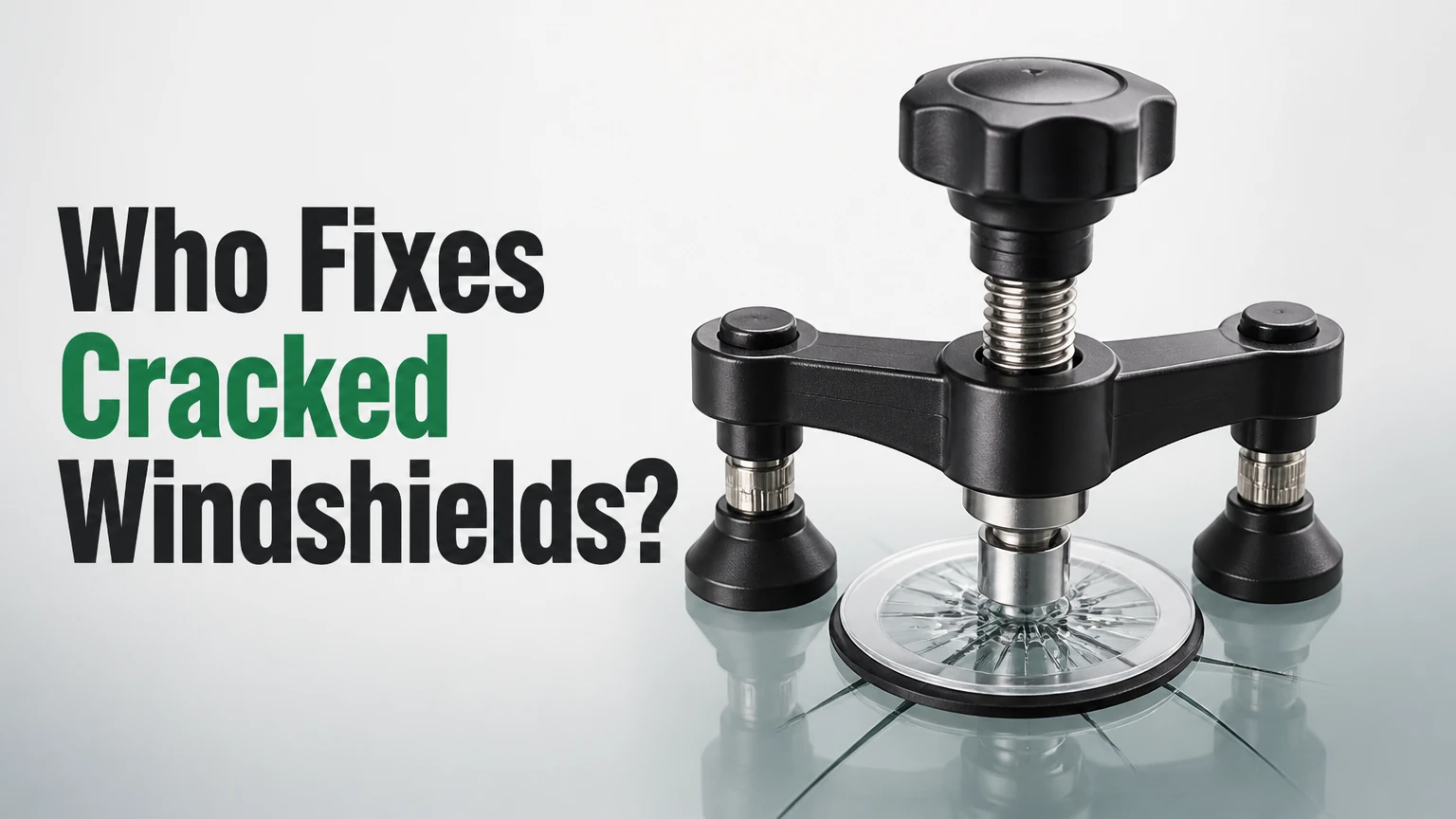
Cracked windshields are fixed by certified automotive glass specialists, mobile repair technicians, and auto body repair shops. General mechanical repair shops rarely perform this service, as windshield restoration requires specialized resin injection tools, structural urethane adhesives, glass cutting equipment, and Advanced Driver Assistance Systems (ADAS) camera calibration technology.
At a Glance
- Primary Specialists: Auto glass technicians handle 90%+ of windshield repairs and replacements.
- Repair Limit: Chips under 1 inch (quarter-sized) and single-line cracks under 6 inches (dollar bill length) can usually be repaired.
- Replacement Triggers: Damage inside the driver’s line of sight, edge cracks within 2 inches of the frame, or multi-layer cracks require full replacement.
- Safety Calibration: Vehicles with forward-facing ADAS cameras require digital recalibration following any windshield replacement.
- Drive-Away Time: Polyurethane adhesive requires a mandatory 1-hour Minimum Drive-Away Time (MDAT) to cure before the vehicle is safe to operate.
Who Fixes Cracked Windshields?
Cracked windshields are fixed by specialized auto glass technicians working out of dedicated glass shops, mobile repair vans, or full-service auto body collision centers.
                       ┌───────────────────────────────┐
                       │   Who Fixes Windshields?      │
                       └───────────────┬───────────────┘
                                       │
         ┌─────────────────────────────┼─────────────────────────────┐
         ▼                             ▼                             ▼
┌─────────────────┐           ┌─────────────────┐           ┌─────────────────┐
│   Auto Glass    │           │ Mobile Repair   │           │ Auto Body Shops │
│   Specialists   │           │   Technicians   │           │                 │
├─────────────────┤           ├─────────────────┤           ├─────────────────┤
│ • In-shop setup │           │ • On-site fix   │           │ • Major crash   │
│ • Static ADAS   │           │ • Chips/cracks  │           │   reconstruction│
│ • Complex glass │           │ • Dynamic ADAS  │           │ • Subcontracts  │
└─────────────────┘           └─────────────────┘           └─────────────────┘
While general mechanics manage engine and brake maintenance, automotive glass services demand distinct certifications, such as those from the Auto Glass Safety Council (AGSC).
Automotive glass specialists focus exclusively on laminated safety glass. They possess specialized vacuum-injection tools to fill glass voids with optical resins and use high-tensile cutting wires to remove damaged windshields without damaging the vehicle’s pinch-weld frame. Auto body collision centers also fix glass during structural vehicle rebuilds, though many contract complex glass work out to dedicated auto glass franchises.
When Can a Windshield Be Repaired vs. Replaced?
A windshield can be repaired if the damage consists of a chip under 1 inch in diameter or a single crack under 6 inches in long. If the damage exceeds these dimensions, or breaches specific safety zones, the windshield must be completely replaced.
| Damage Parameter | Repairable Threshold | Replacement Required |
| Chip Diameter | Less than 1 inch (Quarter-sized) | Exceeds 1 inch |
| Crack Length | Less than 6 inches (Dollar-bill length) | Exceeds 6 inches |
| Edge Proximity | Further than 2 inches from outer border | Within 2 inches of glass frame |
| Layer Penetration | Outer glass layer only | Both outer and inner glass layers |
| Driver Line of Sight | Outside critical viewing area | Inside 8.5 x 11-inch area above steering wheel |
| ADAS Camera View | Clear of sensor window | Directly obstructing camera/sensor field |
The structural boundary is absolute: if a crack penetrates the inner Polyvinyl Butyral (PVB) plastic layer or reaches within 2 inches of the outer frame, structural bond integrity is lost. Edge cracks compromise the windshield’s ability to support the roof during a vehicle rollover, mandating a full replacement regardless of length.
How Much Does Windshield Repair and Replacement Cost?
Windshield repair costs between $60 and $150 for a single chip, while a full windshield replacement costs between $250 and $2,000+ depending on vehicle technology.
Cost Breakdown by Vehicle & Damage Type:

Chip Repair (1st chip):     $60  ├───────────┤ $150
Add'l Chips (per chip):     $20  ├───┤ $40
Standard Replacement:      $250  ├───────────────────────┤ $600
Luxury / ADAS / HUD:       $800  ├───────────────────────────────────────────────┤ $2,000+
ADAS Calibration Only:     $250  ├───────────┤ $500
Additional chip repairs performed in the same session generally cost $20 to $40 per chip. Full replacement pricing breaks down based on the required glass specifications:
- Standard Passenger Vehicles: $250 to $600 for basic laminated glass without embedded sensors.
- Vehicles with ADAS Features: $600 to $1,200, which includes the cost of mandatory digital camera recalibration ($250 to $500).
- Luxury / Heated / HUD Vehicles: $800 to $2,000+, driven by OEM glass requirements, acoustic dampening layers, and embedded heating elements.
How Long Does Windshield Repair or Replacement Take?
A windshield chip repair takes 20 to 30 minutes, whereas a windshield replacement takes approximately 2 hours from start to finish.
The replacement process requires roughly 1 hour of physical removal and installation labor, followed by a mandatory 1-hour Minimum Drive-Away Time (MDAT). MDAT is the non-negotiable duration required for the high-modulus polyurethane adhesive to cure sufficiently to hold the windshield in place during an impact or airbag deployment. Operating a vehicle before the MDAT elapses compromises crash safety systems.
Should You Choose a Mobile Technician or an In-Shop Service?
Choose a mobile glass technician for standard chip repairs or basic windshield replacements at your home or office; choose an in-shop service if your vehicle requires static ADAS calibration or specialized environmental controls.
Mobile technicians handle roughly 70% of routine glass services using self-contained service vans. However, mobile service fails when advanced safety electronics require static calibration targets. Static ADAS calibration demands a level floor, specific lighting conditions, and precise wall target distances that cannot be replicated in a driveway. Additionally, extreme cold (below 40°F/4°C) or rain prevents mobile polyurethane adhesives from curing safely outdoors.
How Do ADAS Cameras and Heads-Up Displays Affect Replacement?
Vehicles equipped with ADAS cameras require precise camera recalibration after replacement, and vehicles with Heads-Up Displays (HUD) require specialized OEM-spec glass to prevent double images.
┌───────────────────────────────────────────────────────────────────┐
│              Windshield Replacement with ADAS & HUD               │
└─────────────────────────────────┬─────────────────────────────────┘
                                  │
         ┌────────────────────────┴────────────────────────┐
         ▼                                                 ▼
┌─────────────────────────────────┐       ┌─────────────────────────────────┐
│     ADAS Camera Systems         │       │    Heads-Up Display (HUD)       │
├─────────────────────────────────┤       ├─────────────────────────────────┤
│ • Camera mounts behind glass    │       │ • Projects data onto glass      │
│ • Misalignment of 1mm causes    │       │ • Requires angled inner PVB     │
│   feet of error down the road   │       │   wedge film                    │
│ • Mandates Static or Dynamic    │       │ • Non-HUD aftermarket glass     │
│   recalibration ($250-$500)     │       │   causes double/blurry images   │
└─────────────────────────────────┘       └─────────────────────────────────┘
When a windshield is replaced, the camera mounted behind the rearview mirror is detached and reinstalled. Even a 1-millimeter positional shift skews the camera’s angle, causing automatic emergency braking and lane-keep assist systems to misjudge road distances.
HUD-equipped vehicles utilize a wedge-shaped PVB interlayer inside the glass to focus projected dashboard information. Installing standard aftermarket glass in a HUD-equipped vehicle creates a blurry, double-image reflection (“ghosting”).
When Is a Windshield Crack Unrepairable Regardless of Size?
A windshield crack is unrepairable if it sits directly in the driver’s primary line of sight, penetrates both layers of glass, or contaminates the inner plastic interlayer.
Repair resin cures with an optical clarity rating of roughly 85% to 95%. When placed inside the driver’s critical viewing area—defined as an 8.5 x 11-inch region centered in the steering wheel’s sweep—this minor optical distortion creates hazardous glare from headlights at night. Furthermore, if a crack allows dirt, water, or chemical car washes to reach the PVB interlayer, resin cannot form a structural bond, making replacement mandatory.
Why Do Small Windshield Cracks Spread Suddenly?
Small windshield cracks spread due to thermal shock, structural chassis flexing, and moisture expansion within the glass fissure.
                             ┌───────────────────────┐
                             │ Microscopic Chip/Crack │
                             └───────────┬───────────┘
                                         │
        ┌────────────────────────────────┼────────────────────────────────┐
        ▼                                ▼                                ▼
┌───────────────────────┐    ┌───────────────────────┐    ┌───────────────────────┐
│     Thermal Shock     │    │    Mechanical Stress  │    │ Hydrostatic Pressure  │
├───────────────────────┤    ├───────────────────────┤    ├───────────────────────┤
│ Cold glass + Defroster│    │ Driving over potholes │    │ Trapped water freezes │
│ OR                    │    │ Frame twisting on     │    │ and expands inside    │
│ Hot glass + Max A/C   │    │ uneven road surfaces  │    │ fissure               │
└───────────┬───────────┘    └───────────┬───────────┘    └───────────┬───────────┘
            │                            │                            │
            └────────────────────────────┼────────────────────────────┘
                                         ▼
                             ┌───────────────────────┐
                             │ Unrepairable Spiderweb │
                             │        Crack          │
                             └───────────────────────┘
A car’s windshield is a structural element under constant tension. Turning on the air conditioner on a 90°F (32°C) day—or blowing hot defroster air onto a sub-freezing glass pane—creates rapid differential expansion across the inner and outer glass layers. This thermal stress causes a 1/2-inch chip to snap into a 12-inch crack instantly. Driving over speed bumps or potholes forces chassis flex into the glass frame, driving the crack further across the pane.
Can DIY Windshield Repair Kits Permanently Ruin a Windshield?
Yes, DIY windshield repair kits can permanently ruin a windshield if applied over dirt or moisture, or if the resin is cured prematurely before air is completely evacuated from the chip.
Commercial DIY kits utilize low-viscosity resins and basic suction bridge tools. If a vehicle owner applies resin over road grime, wax, or trapped rain, the resin locks the debris into the glass fissure permanently. Once cured under sunlight, professional injectors can no longer pull a vacuum or clear the break. The dirty resin fails to bond the glass layers, causing the underlying damage to continue spreading while rendering professional repair impossible.
Will Auto Insurance Cover a Cracked Windshield?
Auto insurance covers windshield repair and replacement under comprehensive coverage, often with zero deductible for repairs.
Because repairing a chip costs insurance companies significantly less than paying for a full replacement, insurers frequently waive the deductible for chip repairs. For full windshield replacements, vehicle owners must pay their agreed-upon comprehensive deductible unless they reside in states with zero-deductible glass legislation (such as Florida, South Carolina, and Kentucky) or carry a specific zero-deductible glass endorsement rider on their policy.
Is It Illegal to Drive With a Cracked Windshield?
Yes, it is illegal to drive with a cracked windshield if the damage obstructs the driver’s view, interferes with windshield wiper operation, or compromises structural integrity.
Federal Motor Carrier Safety Regulations (FMCSR) and state vehicle codes prohibit cracks or spiderwebbing that intersect the driver’s primary field of vision. Law enforcement officers routinely issue equipment violation notices (“fix-it tickets”) for cracked glass. Beyond visual obstruction, a compromised windshield loses up to 30% of its structural strength, increasing the risk of roof collapse in a rollover accident and preventing passenger-side airbags from deploying correctly.
What Is the Difference Between OEM and OEE Glass?
OEM (Original Equipment Manufacturer) glass is produced by the supplier that built the vehicle’s original factory glass, while OEE (Original Equipment Equivalent) glass is manufactured by third-party glass companies.
- OEM Glass: Manufactured to exact factory specifications using identical tooling, optical clarity tolerances, thickness, and color tints. It features the vehicle brand logo etched into the corner and offers guaranteed fitment for ADAS alignment and HUD clarity.
- OEE Glass: Produced by alternative manufacturers to match general vehicle dimensions. While fully compliant with Department of Transportation (DOT) safety standards, OEE glass may feature slight variances in glass thickness, solar acoustic dampening layers, or curvature tolerances.
What Is Minimum Drive-Away Time and Why Does It Matter?
Minimum Drive-Away Time (MDAT) is the mandatory curing period required for polyurethane windshield adhesive to achieve sufficient structural shear strength to hold the glass in place during a collision.
Modern auto glass is bonded to the vehicle’s steel pinch-weld frame using high-modulus polyurethane adhesives. In a frontal collision, the passenger airbag deploys directly against the inside of the windshield at speeds exceeding 150 mph (240 km/h). If the vehicle is driven before the MDAT has elapsed, the force of airbag deployment will pop the entire glass pane out of the frame, causing the airbag to fail and reducing structural rollover support.
How Do You Prevent a Small Windshield Chip From Spreading?
To prevent a small windshield chip from spreading before your repair appointment, protect the damage from water, dirt, and sudden temperature shifts.
- Cover the Damage with Clear Tape: Place a small piece of clear clear packing tape directly over the dry chip. This prevents dirt, road grime, and rain from entering the fissure without obstructing your view.
- Avoid Thermal Shock: Do not turn your air conditioner or defroster to maximum settings. Park in shaded areas or garages to avoid direct sunlight exposure.
- Avoid High-Pressure Car Washes: Pressure washers force water directly into the break and apply mechanical force that can snap the chip into an unrepairable line crack.
- Drive Cautiously: Avoid slamming doors or driving over potholes, speed bumps, and rough terrain that induce chassis flex.
The Bottom Line
Cracked windshields are serviced exclusively by automotive glass technicians and specialized repair facilities using advanced optical resins and recalibration tools. Small chips under 1 inch and single cracks under 6 inches can usually be repaired for $60 to $150 in under 30 minutes.
However, damage located inside the driver’s line of sight, along the perimeter frame, or directly over ADAS sensor windows demands a complete replacement ($250 to $2,000+) followed by dynamic or static system calibration. To maintain vehicle safety, address chips immediately before thermal changes or road vibrations force the damage to spread.