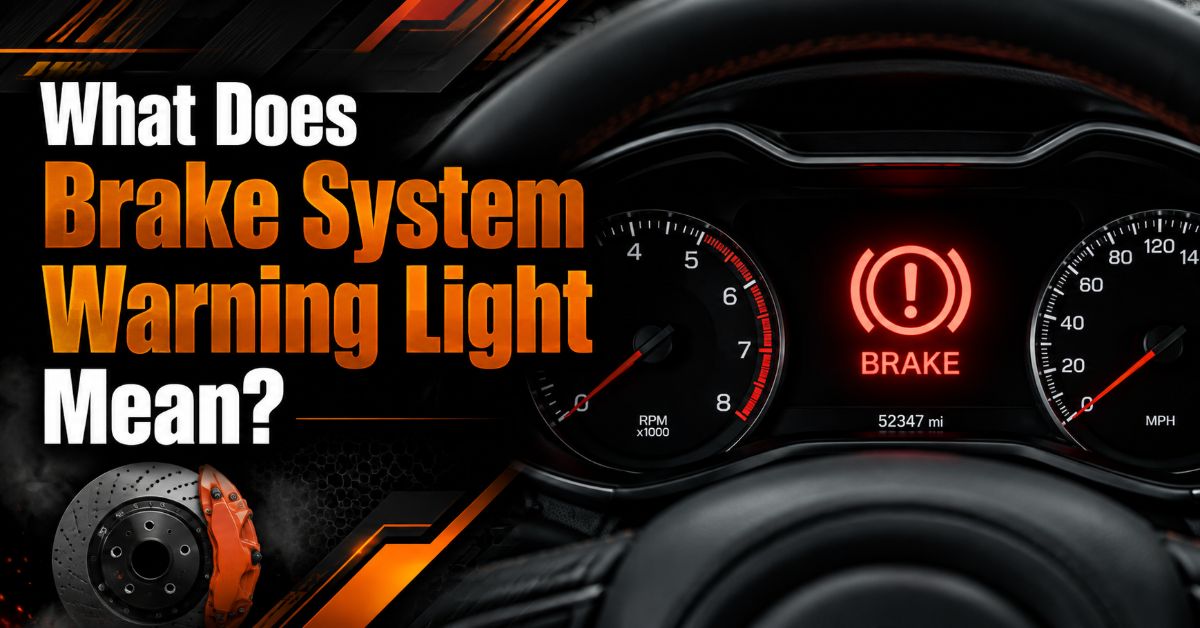
The brake system warning light indicates that the vehicle’s computer has detected a critical safety issue, most commonly a severe drop in the master cylinder brake fluid level, a loss of hydraulic pressure, or an engaged parking brake. Ignoring this light can lead to catastrophic brake failure and complete loss of stopping power.
At a Glance: Brake Warning Light Facts
- The dashboard light activates when brake fluid drops 0.25 to 0.5 inches below the reservoir “MAX” line.
- A solid red light usually signals fluid loss, pressure drop, or an active parking brake switch.
- Topping off fluid without inspecting pads hides dangerous friction material wear down to the 1mm threshold.
- A flashing brake light in vehicles like Volkswagens signifies a total Electronic Brake Distribution (EBD) failure.
- Ambient temperatures dropping below -10°C (14°F) can contract fluid enough to trip the sensor overnight.
What does the brake system warning light mean?
The brake system warning light means your vehicle’s onboard computer has identified a safety fault within the braking infrastructure, primarily triggered by low hydraulic pressure or diminished brake fluid. Modern dual-split brake systems rely on closed hydraulic lines; any compromise to this pressure drops a mechanical switch or float sensor, instantly illuminating the red warning indicator on the instrument cluster.
Drivers must treat this light as an immediate emergency directive. Unlike maintenance reminders such as an oil change light, the brake warning light signals that the physical mechanism responsible for stopping a moving vehicle is compromised. If hydraulic pressure is lost entirely, the brake pedal will sink straight to the floorboards with zero resistance.
What specific fluid level drops trigger the dashboard warning light?
The brake system warning light triggers when the brake fluid in the master cylinder reservoir drops roughly 0.25 to 0.5 inches below the manufacturer’s “MAX” line. Inside the reservoir cap assembly, a plastic float rests on the fluid surface. As fluid is consumed by normal component wear or lost via a slow leak, the float drops downward until it physically trips an electrical microswitch.
This precise calibration ensures the light illuminates long before the reservoir runs completely dry, preserving a reserve buffer of fluid in the upper chamber. However, once that float drops, you are operating on borrowed time. Even a fraction of an inch further drop introduces air into the master cylinder bores, creating a spongy or dead pedal feel.
How does brake pad wear activate the electronic warning light?
Brake pad wear activates the warning light when the friction material thins down to approximately 1 millimeter (0.03 inches), causing an embedded steel wear sensor to scrape against the steel brake rotor. This physical contact completes an electrical ground circuit through the vehicle’s chassis, sending a closed-loop signal to the instrument cluster.
As disc brake pads wear down over tens of thousands of miles, the brake caliper pistons must travel outward to clamp the shrinking pads against the rotor. This outward displacement of metal pistons physically draws a greater volume of fluid out of the master cylinder reservoir and down into the brake lines, which is why worn-out pads directly trigger the low-fluid float switch even in the absence of an external leak.
Why is my brake warning light on even when the fluid reservoir is full?
Your brake warning light can remain illuminated with a full reservoir due to a partially engaged parking brake, a stuck float switch, or an internal master cylinder bypass. When the parking brake pedal or hand lever is engaged by even a single click—activating the mechanical switch under 5% pressure—the dashboard circuit grounds out and turns on the light regardless of fluid volume.
Another frequent mechanical culprit is a sticky float sensor inside the master cylinder reservoir cap assembly. If mineral deposits or degraded fluid cause the float to stick in the lowered position, it will falsely report low fluid levels to the car’s computer. Finally, internal master cylinder seal failures bypass fluid internally without altering external reservoir volumes, triggering pressure-differential switches.
What is the “Topping Off” trap with low brake fluid?
The “topping off” trap occurs when a vehicle owner pours fresh brake fluid into a low reservoir to turn off the dashboard light without investigating why the fluid level dropped. Because low fluid is almost always a symptom of severely worn brake pads or an active hydraulic leak, simply diluting the system with fresh fluid masks the underlying mechanical failure.
When a mechanic eventually pushes the caliper pistons back into their bores during a future brake pad replacement, the overfilled reservoir will overflow aggressively, spilling corrosive glycol-based brake fluid over painted engine bay surfaces and destroying components. Always inspect your brake pad thickness before adding fluid to an unexplainably low reservoir.
What is the difference between a solid and a flashing brake light?
A solid brake warning light typically indicates an active parking brake, low fluid, or minor pressure differential, whereas a flashing red brake light often signifies a catastrophic electronic safety subsystem failure. For instance, in Volkswagen and Audi vehicle platforms, a flashing red brake light accompanied by audible beeps indicates a total Electronic Brake-force Distribution (EBD) malfunction.
An EBD failure means the vehicle can no longer dynamically balance braking pressure between the front and rear wheels during emergency stops, risking sudden rear-wheel lockup and a dangerous spin. Always consult your specific vehicle owner’s manual, as manufacturer warning logic varies significantly between domestic, Asian, and European brands.
Why does the brake light come on only when I accelerate or corner?
The brake light illuminates during acceleration or sharp cornering because G-forces cause the remaining brake fluid in the master cylinder to slosh violently toward the back or sides of the reservoir. If your brake fluid level is sitting right on the edge of the “MIN” threshold, this temporary displacement exposes the float sensor, triggering a momentary dashboard warning light until vehicle momentum stabilizes.
This phenomenon serves as an early-warning indicator that your brake fluid is critically low or your brake pads are wearing thin, even if the light goes away when driving on flat, straight roads at steady speeds.
Can extreme cold weather turn on the brake warning light overnight?
Extreme cold weather can turn on the brake warning light overnight because glycol-based brake fluid contracts when exposed to freezing temperatures. When ambient temperatures plunge below -10°C (14°F), the physical volume of the fluid shrinks just enough to drop the reservoir float below the critical electrical switch threshold during cold morning startups.
Once the engine runs for 10 to 15 minutes and radiant heat from the engine bay warms the master cylinder, the fluid expands back to its normal operating volume, causing the dashboard warning light to turn off on its own.
Why do both the ABS and brake system warning lights come on together?
Both the ABS and main brake system warning lights illuminate simultaneously when the vehicle detects a fault within the Anti-lock Braking System computer module, a failed wheel speed sensor, or a cracked tone ring. Modern vehicle architectures integrate the ABS module directly with the primary hydraulic control unit; when the ABS module loses communication or suffers an internal electrical fault, it triggers both lights as a failsafe protocol.
This dual-light scenario means your computerized anti-lock protection and stability control features are disabled, leaving you with standard, unassisted mechanical braking capability.
Can a bad fuse cause the brake warning light to stay on?
A blown or corroded fuse can cause the brake warning light to stay on by cutting power or signal continuity to the instrument cluster or the ABS control module. When a fuse protecting the brake monitoring circuits fails, the instrument cluster loses its expected voltage signal from the sensors and defaults to an open-circuit safety state, illuminating the warning light to alert the driver to a system monitoring failure.
Is it ever safe to drive a short distance with the brake light on?
It is never safe to drive with the brake light on unless you have verified with 100% certainty that the light is caused solely by an unreleased parking brake switch. If the light is triggered by low fluid or a hydraulic pressure drop, a minor internal seal leak can rupture completely under high pedal pressure, resulting in total brake failure within seconds and leaving you unable to stop.
How do you systematically diagnose and fix a persistent brake warning light?
1.Verify the Parking Brake Switch:Check this first before opening the engine bay.
Ensure the handbrake lever or foot-operated parking brake pedal is completely released. Inspect the mechanical plunger switch under the dash or console to verify it opens fully when the brake is disengaged.
2.Inspect the Master Cylinder Fluid Level:Do not immediately top off without checking pads.
Open the hood and check the brake fluid reservoir level relative to the MAX and MIN lines. If fluid is low, inspect all four wheels, brake lines, and calipers for wet hydraulic leaks.
3.Measure Brake Pad Friction Material:Identify hidden wear causing fluid displacement.
Remove the wheels or use a brake inspection mirror to measure the thickness of the front and rear brake pads. Replace pads if the friction material is worn down near the 1mm wear indicator.
4.Scan for Diagnostic Trouble Codes (DTCs):Check ABS and chassis module errors.
Plug an OBD-II scanner capable of reading chassis (C-codes) into the diagnostic port to uncover stored faults related to wheel speed sensors, low system voltage, or EBD module failures.
The Bottom Line
The brake system warning light is a critical safety alert signaling hydraulic pressure loss, low fluid, or parking brake engagement. Never ignore this warning or rely on blind fluid top-offs that mask severe brake pad wear. Verify your parking brake, inspect your fluid and pads, and address hydraulic faults immediately to maintain safe vehicle operation.